
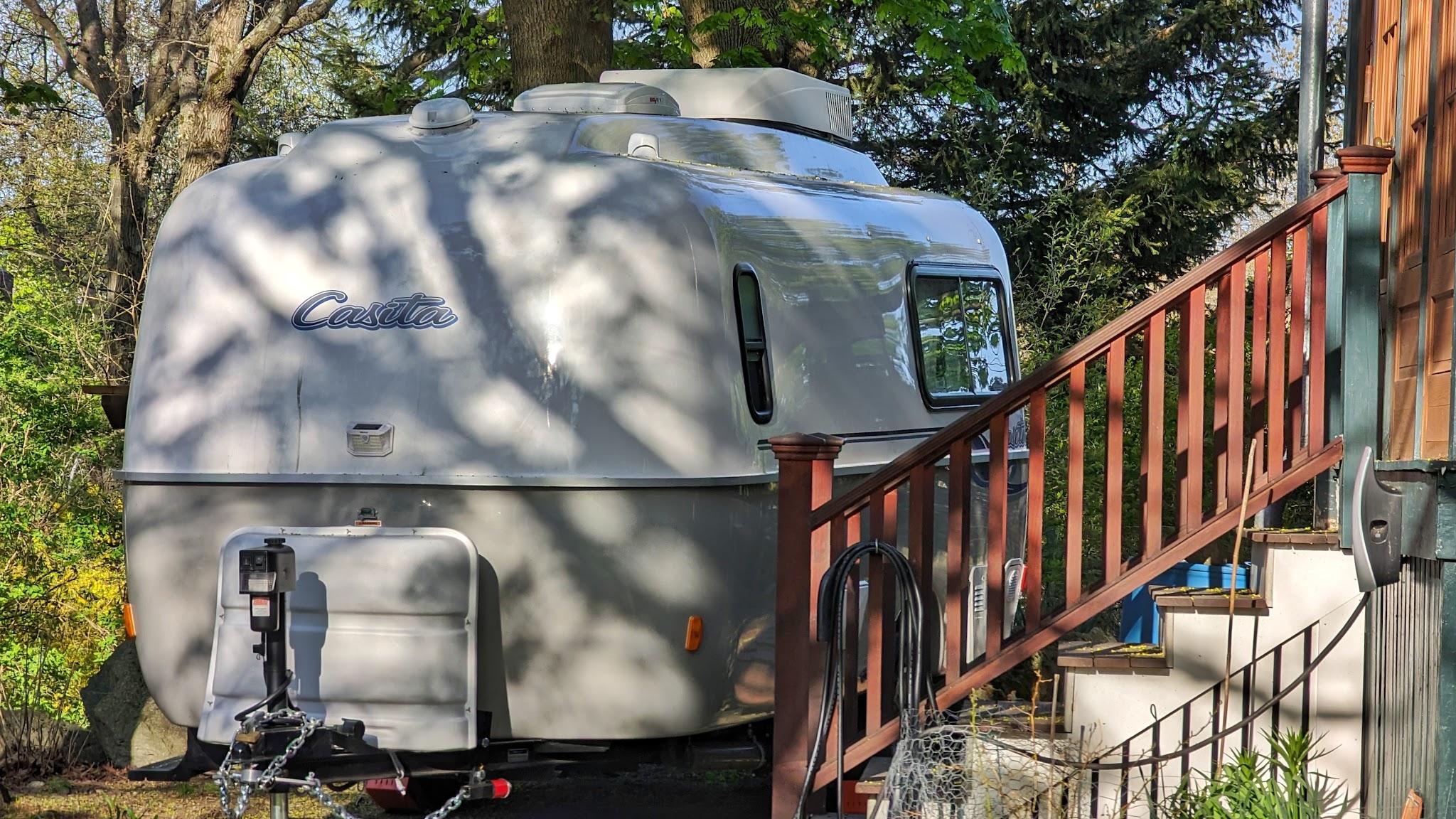
Travel trailer hauling companies should confirm whether the trailer will be towed on its own running gear or carried. Disclose its dimensions, hitch and known condition issues, then agree the precise delivery endpoint. Hauling does not automatically include campsite positioning or setup.
Ask which movement the quote includes
A travel trailer may be towed on its own running gear or carried on suitable transport equipment, subject to professional acceptance. Tell each company which arrangement you need. If tires, brakes, bearings, lights or the coupling are suspect, disclose that before accepting a tow-away quote.
Do a readiness check before reserving the movement
A trailer that has stood unused may look complete while still needing an assessment before towing. Give the operator the known condition history and arrange qualified inspection when tires, brakes, bearings, lights or coupling condition is uncertain. Ask what happens if the transporter rejects it at pickup: who makes that decision, which charges apply and whether carriage is an available alternative.

Keep site setup separate from road transport. If the destination is a campsite or storage space, confirm permission, opening hours, turning room and who supplies any positioning assistance. The cost to move a travel trailer should be compared with the same endpoint and preparation boundary. Do not accept a tow-away number as covering repairs, unloading or connections unless the written order says so.
Trailer readiness
Known running-gear issues disclosed
Qualified assessment when neededPickup
Firm access and coupling space
Operator-approved loading pointDestination
Site permission and turning room
Setup inclusions explicitly listedTurn this plan into comparable transport options
Use the actual vehicle, pickup and delivery details, timing and handling needs so every quote starts from the same scope.
Prepare a useful trailer record
- Model, overall dimensions and available weight information.
- Hitch type, coupling details and photos of the connection.
- Known running-gear faults and how long it has been stationary.
- Contents, attached accessories and the pickup surface.
- Whether the destination has room to turn and position it.
Have the right person approve readiness
NHTSA’s trip guidance includes checking trailer brake lights and turn signals. Arrange a qualified inspection when condition is uncertain; a transport enquiry is not a roadworthiness inspection. Obtain the manufacturer’s instructions for preparing the particular trailer rather than applying another model’s settings.
NHTSA reference
Separate hauling from campsite setup
Ask whether the contract ends with delivery to an accessible point or includes positioning, leveling and other setup work. State who must be present with keys and site permission. Resolve cancellation, waiting and failed-pickup terms if the trailer is rejected on inspection.
For custody, request condition photographs and written cargo-coverage information applicable to the selected movement. Choose the offer whose equipment, trailer acceptance and delivery obligations are explicit, not one that merely promises to haul any RV.