
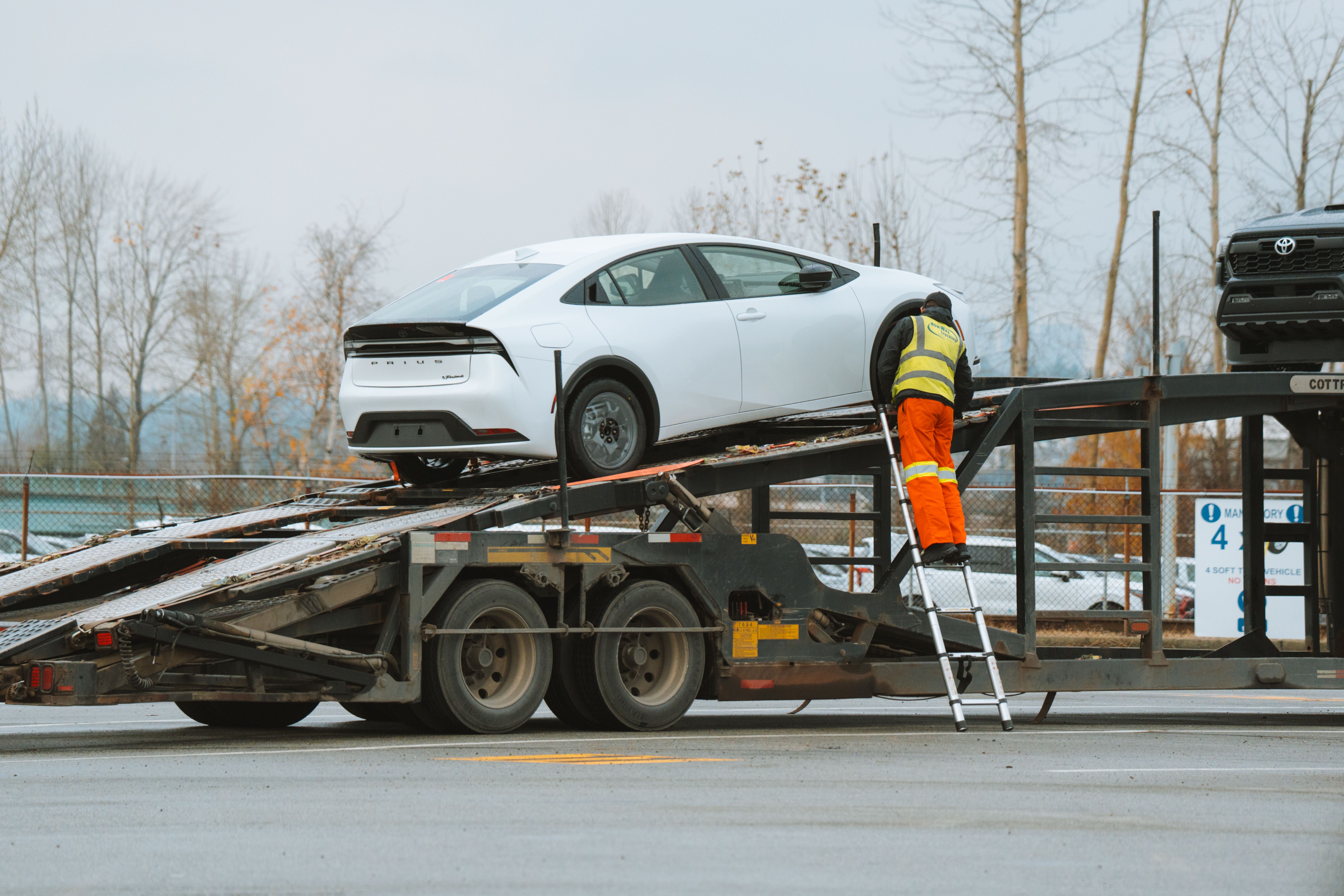
Brooklyn car transport needs the assigned carrier’s approval of the truck approach and loading location. Give the full address, cross street, vehicle condition and dates; passenger-car navigation is not a truck-access plan. Any off-site handoff needs permission and a practical way to get the car there.
Can the carrier collect at your Brooklyn address?
Possibly, but have the assigned carrier approve the street and unloading space first. Send the full address, cross street, vehicle condition and preferred collection window. If the carrier proposes a meeting point, confirm its exact location and your permission to use it before moving the car there.
Reconcile the building plan with the carrier plan
Ask the building contact what access or loading arrangements it can authorize, then pass those details to dispatch. A building’s permission does not replace the carrier’s assessment of street restrictions and equipment clearance. Likewise, a driver’s preferred stopping point does not establish the property owner’s permission.
For an off-site meeting, set the notice procedure and identify the person bringing the car. If the vehicle cannot legally or mechanically be driven, disclose that before accepting the alternative. Ask who provides any separate local movement and where its custody ends. Do not let two bookings leave an undocumented gap.
Review the door-to-door transport explanation against the final Brooklyn arrangement. Keep the location, agreed payment and condition record together. If the assigned truck changes, confirm that the same point is still workable before the releasing person starts moving the car.
| Option | Clarify | Acceptance test |
|---|---|---|
| Building permission | Access and hours | Does not certify truck route |
| Carrier assessment | Street and equipment fit | Does not grant property permission |
| Final meeting | Both approvals and vehicle mobility | One documented handoff |
Turn this plan into comparable transport options
Use the actual vehicle, pickup and delivery details, timing and handling needs so every quote starts from the same scope.
Passenger navigation is the wrong starting point
NYC DOT distinguishes through truck routes from local truck routes and restricts commercial vehicles on most parkways. Its truck map and current routing notices are the relevant starting points. Tell dispatch that the job ends in Brooklyn; do not assume a route through another borough gives access to every local street.
NYC DOT reference
Information to send before dispatch
- Photos showing the street width, corners and entrance, without claiming they certify clearance.
- Any posted loading or parking instructions supplied by the building.
- Whether the vehicle starts, rolls, steers and brakes.
- A contact who can bring the keys and attend the condition inspection.
- A fallback meeting location for dispatch to evaluate.
Address collection or a meeting point?
| Arrangement | Resolve before accepting |
|---|---|
| Street-side collection | Where will the truck stand and who checks restrictions? |
| Off-site meeting | Who drives the car there and returns afterward? |
| Vehicle cannot move | What recovery or loading equipment is included? |
Keep access changes visible in the price
Ask whether the quoted total assumes collection at your address or elsewhere. Record who approves an alternative stop and whether extra handling or waiting is chargeable. Do not accept an unspecified relocation after dispatch as though it were the original service.
For delivery, choose a receiver with time to inspect in suitable light and compare the car with the pickup record. Keep the dispatch and claims contacts with the booking documents. A company advertising Brooklyn service has not thereby confirmed a local office or a slot for your dates.