
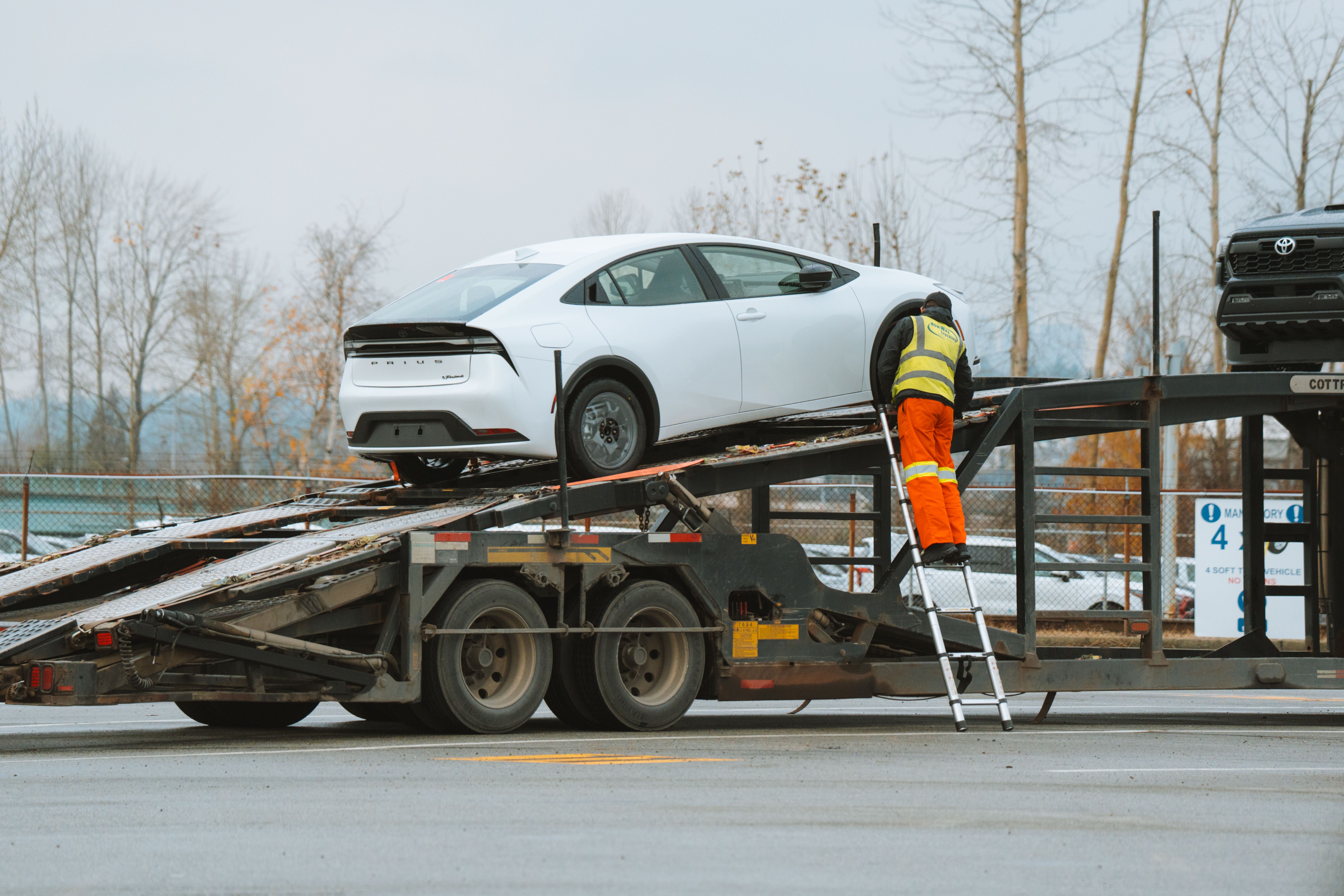
Northern California auto transport companies should commit to the specific endpoints and equipment, not just a broad region. Ask the hauler to assess the truck approach and any terminal or local-transfer arrangement needed to complete the journey.
Distinguish the truck network from a car route
Caltrans directs users to the official California Truck Network in QuickMap when verifying truck-route information. Caltrans official California Truck Network
Ask the hauler to assess its equipment against the intended approach. Do not infer that a route suitable for your car is suitable for a loaded transporter. For a constrained property, identify an alternative before dispatch and establish who obtains permission to use it.
Compare terminal reach with property reach
If an offer relies on a terminal, get the actual location, acceptance and release hours, and the party holding the car. Calculate how the car and receiver reach the final destination from there. A facility outside your practical reach may not solve the original delivery request.

For property service, send the constrained approach details before dispatch. If the operator declines that access, evaluate the replacement using the car’s operating condition and your available local help. Avoid tying a fixed flight or service appointment to an estimated transport arrival.
Use California broker responsibilities when a regional arranger, rather than the truck operator, is taking the booking.
Turn this plan into comparable transport options
Use the actual vehicle, pickup and delivery details, timing and handling needs so every quote starts from the same scope.
| Option | Clarify | Acceptance test |
|---|---|---|
| Property delivery | Approach accepted for equipment | Receiver can attend |
| Terminal release | Facility and hours confirmed | Onward journey is feasible |
Request a precise service commitment
A Northern California service-area statement does not prove a local yard, regular pickup schedule or truck assignment. Ask for the legal booking name and the role of any separate carrier. If terminal collection is offered, get its location and release terms so you can compare the complete journey.
Explain the vehicle’s clearance, modifications and operating condition. Choose open or enclosed service based on handling needs, and ask how a non-running car would be loaded and moved after arrival.
Compare contingencies alongside the price
- Use the same ready date and earliest receiving date in each request.
- Get the full charge and payment milestones.
- Review cancellation, revised-location and storage conditions.
- Nominate people able to inspect and sign at both ends.
Save a departure condition record and pass it to the receiver. Ask how dispatch communicates a route-driven delay and how to report a delivery discrepancy. Keep transport estimates separate from fixed travel or service appointments.