
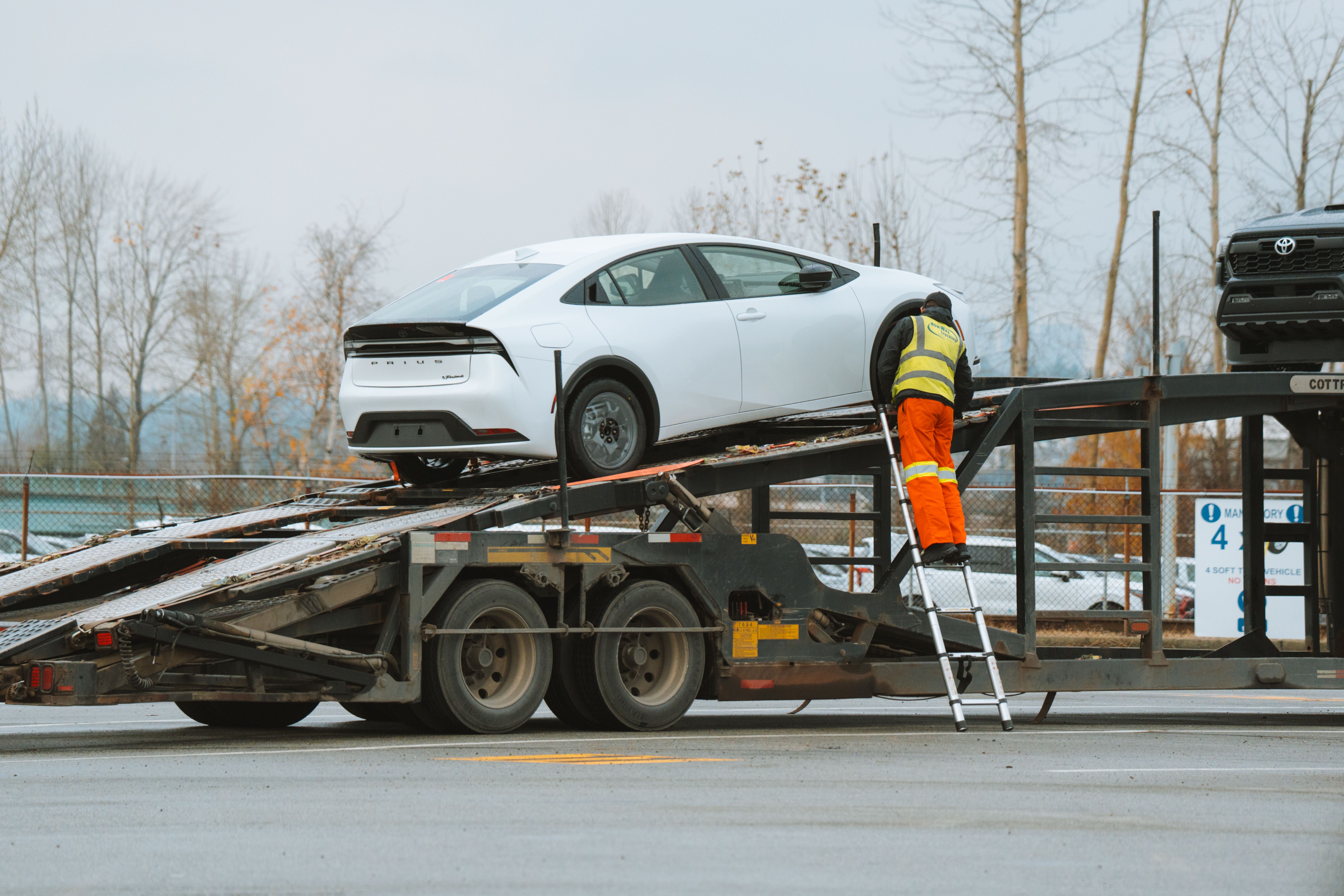
Ask dispatch what vehicle will unload the car and how much space the operation needs. Give it the destination block and any property entrance constraints.
Get the equipment and footprint from the provider
The recipient should not guess the truck’s length when asking the city or a manager about space.
Check whether an approved private loading area is available. If the carrier proposes a public curb or a different meeting place, identify how the car reaches its eventual destination afterward. Disclose an inoperable condition early because it may rule out a simple drive from the meeting point.
Handoff and execution checks for Car shipping to Philadelphia
Philadelphia’s temporary no-parking permit process includes moving trucks and requests the address
Philadelphia temporary no-parking permit guidance
Philadelphia temporary no-parking permit guidance
Ask the city whether that process covers the proposed car-carrier operation
A moving-truck listing does not authorize a street closure
Check the temporary no-parking process
Philadelphia’s temporary no-parking permit process includes moving trucks and requests the address, truck length and start and end time. Philadelphia temporary no-parking permit guidance
Ask the city whether that process covers the proposed car-carrier operation and follow its current lead-time and posting instructions where applicable. A listing for moving trucks does not automatically resolve every equipment type or authorize a street closure.
Turn this plan into comparable transport options
Use the actual vehicle, pickup and delivery details, timing and handling needs so every quote starts from the same scope.
Make clear who applies, supplies accurate dimensions, obtains any required signs and verifies the permission. Keep those responsibilities in the receiving plan instead of leaving the owner and driver each to assume the other has handled them.
Align a time-limited arrangement with the arrival window
Discuss how a changed delivery estimate affects the approved space. Ask the provider when it can narrow the window and who will notify the recipient if it moves outside the arrangement. Identify an approved fallback or the cost and procedure for rebooking; do not assume a permit can be informally extended.
Supply the origin, release contact and vehicle condition so competing offers describe the same journey. Read waiting, cancellation and payment terms, and send pickup photographs to the person attending delivery. That person should inspect the vehicle and retain the condition record. The goal is a coordinated handoff, not simply a sign on a block at the wrong time.
Match Philadelphia street-space timing to the transport window
A street-space arrangement is useful only when it overlaps the carrier’s actual delivery plan. Ask when dispatch can narrow the window enough for the recipient to manage any posting or permit requirement, and decide what happens if the truck arrives outside that period. Keep a private or otherwise approved fallback that the vehicle can reach.
If a rescheduled handoff adds waiting, storage or another local movement, obtain the charge and the person authorized to approve it before the car leaves the origin.