
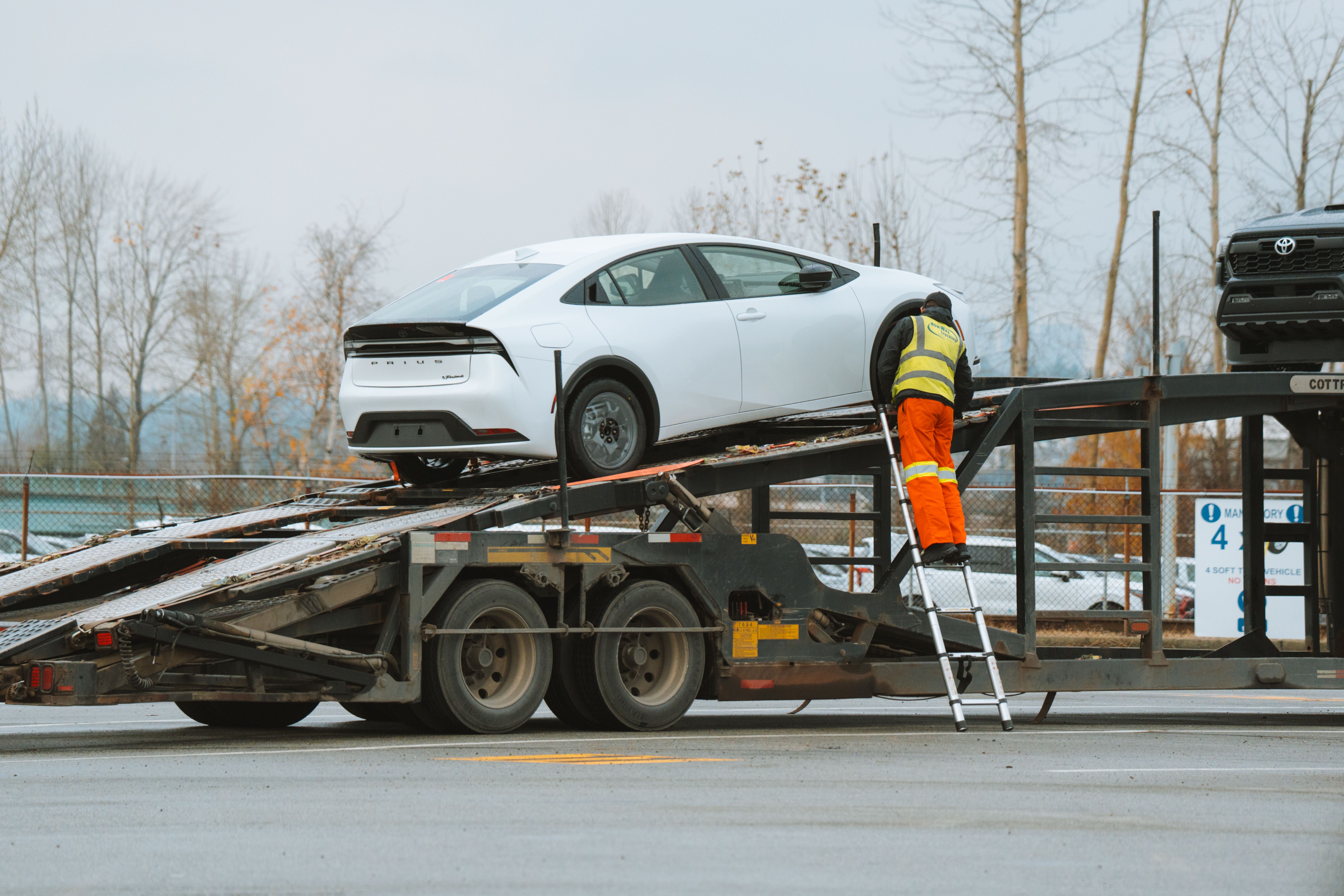
For Boston-to-San Francisco transport, treat the job as two property-level handoffs, not just a city-to-city lane. Confirm truck access or a permitted alternate point at both ends, who controls each handoff, and how the final movement is handled if the San Francisco property cannot take the carrier.
Origin planning with Boston heavy-vehicle network
Boston’s designated heavy-commercial routes can matter to carrier approach planning, but they do not establish driveway or curb feasibility at the actual address.
Booking and exception checks for Car Transport Boston To San Francisco
The route label in Car Transport Boston To San Francisco is not yet an executable
The route label in Car Transport Boston To San Francisco is not yet an executable shipment.
Turn network context into confirmed property handoffs
Use Boston heavy-vehicle network and Bay Area goods-movement plan for the broader system picture and turn each endpoint into a confirmed property handoff.
Treat Boston truck routes as approach context, not property approval
Boston heavy-commercial routes can inform the carrier approach, but they do not establish driveway or curb feasibility at the booked pickup address.
Record custody when a staging point replaces the requested property
If a provider proposes nearby staging instead of the requested property, record who controls custody at the origin handoff and at the final destination.
Turn this plan into comparable transport options
Use the actual vehicle, pickup and delivery details, timing and handling needs so every quote starts from the same scope.

Resolve both property handoffs
Define custody at origin and destination in writing, especially if the provider proposes a nearby staging area instead of the requested property.
Keep quote scope comparable
Use identical core shipment inputs for every quote so the final decision reflects provider differences rather than hidden scope changes.
Turn Boston and San Francisco network context into two confirmed property handoffs
For Boston, provide the actual pickup entrance, release hours and key holder, then ask the assigned transporter to accept the approach. For San Francisco, do the same with the receiving property and unloading space. Freight-corridor information can explain why route planning matters, but it does not reserve a curb or prove that either driveway can accommodate the truck.
If staging is required, record the lawful location, who moves the car between that point and the property, and any added charge. Report operability and low-clearance issues before accepting the equipment. Keep the same handoffs and vehicle facts in every bid, and pass the Boston condition record to the San Francisco receiver for inspection before the final receipt is completed.
Resolve the San Francisco handoff before the car leaves Boston
Give dispatch the exact San Francisco receiving property and explain curb, garage, gate, or management constraints that could affect a transporter. A passenger-car route to the address does not prove that a loaded hauler can stop and deploy ramps there. If another handoff point is proposed, confirm permission and how the car completes the final distance.
The Boston sender and San Francisco receiver should share the same condition evidence and booking contacts. For a nonrunning or low-clearance vehicle, make the final transfer compatible with the car’s condition instead of assuming it can be driven from an alternate location.