
Confirm the releaser, keys and any dealership or storage authorization. Describe whether the car runs and any low-clearance or modified features. If you leave before pickup, give a local contact the carrier details and condition-record instructions.
Make Chicago collection independent of your move
-
Match the receiving space to the activity
SFMTA describes white zones as passenger-loading areas. Do not treat one as permission for a transporter to unload your car. Ask the operator to review a lawful handoff position with the receiving property.
-
Keep vehicle handling in the quotation
If reserved space is necessary, consult SFMTA’s temporary-signage process and confirm its applicability before relying on it. A sign or parking arrangement does not replace the carrier’s assessment of street approach, turning room and loading equipment.
-
Agree who makes delivery decisions
Why to disclose it: Someone must move and receive the car there
-
Name a receiver with access to pickup photographs and authority to
Name a receiver with access to pickup photographs and authority to inspect the car. Establish how the driver will provide updates and who approves a change of location. Review storage, waiting and additional handling terms before the car leaves Chicago.
-
Keep state ownership or registration requirements separate if you are relocating
Keep state ownership or registration requirements separate if you are relocating or purchasing. The transport receipt documents custody; it does not resolve all future road-use obligations.
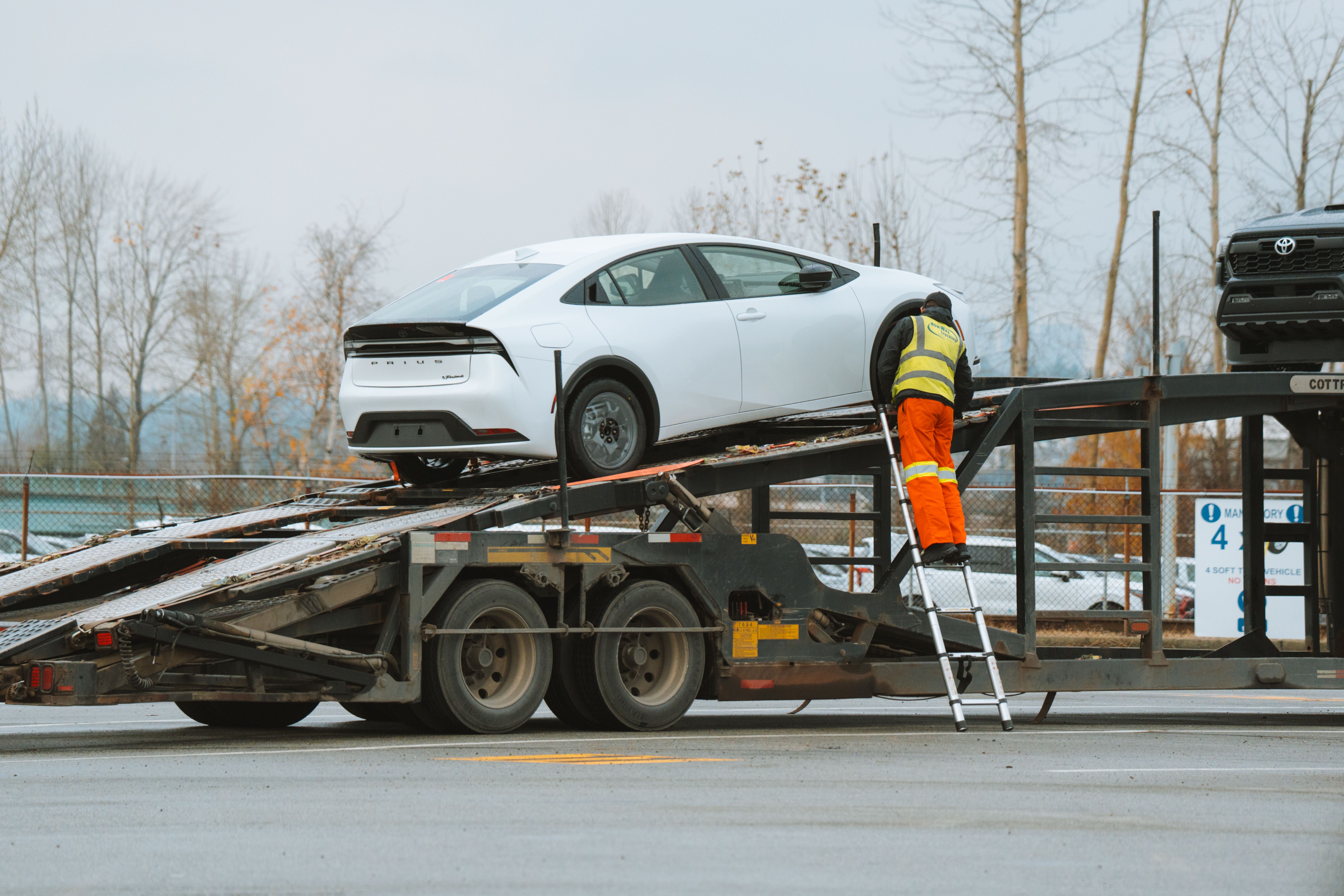
Match the receiving space to the activity
SFMTA reference
SFMTA reference
Design the San Francisco handoff around space, not convenience
In San Francisco, the closest address is not automatically the best place for a multi-vehicle transporter to stop. Describe the destination street, grade, garage entrance, curb conditions, and any known loading limitations to the provider. Ask the assigned carrier to approve the delivery point or identify a larger legal area where the receiver can meet it. If the car is low, modified, or not running, the alternate site also has to support the planned unloading method. Decide who drives or tows the final distance before the carrier leaves Chicago, because the long-haul driver should not be expected to invent a local transfer at arrival.
Prepare Chicago release so a schedule change does not strand the car
If the owner is moving ahead of the vehicle, give a reliable Chicago representative the keys, release authority, vehicle documents needed for pickup, and the condition-recording instructions. Confirm whether a dealership, garage, apartment building, or storage location has specific hours. Ask the provider how pickup estimates are updated and how much notice the representative receives. A backup releaser is useful when the window spans working hours. The goal is to make the vehicle available when the carrier is actually ready without leaving keys unattended or forcing the driver to wait for someone who was never part of the booking.
Turn this plan into comparable transport options
Use the actual vehicle, pickup and delivery details, timing and handling needs so every quote starts from the same scope.
Match transport equipment to the vehicle and the city
State the car’s true ground clearance, dimensions, modifications, and operating condition. Compare open and enclosed service based on the vehicle and your priorities, not on a general belief that one is always required. For a specialty or low-clearance car, ask how it will be loaded and whether the same type of equipment can reach the San Francisco handoff. A technically suitable trailer is not useful if the final street cannot accommodate it. Put any approved alternate meeting point and special loading requirement into the written order so the driver and receiver are working from the same plan.
Give the receiver a complete evidence package
Before Chicago pickup, create dated photographs and review the carrier’s condition report. Send those records, the booking details, and the latest arrival instructions to the San Francisco receiver. At delivery, the receiver should inspect the same areas before signing, note discrepancies using the contracted process, and keep a copy of the final paperwork. If delivery is moved to an alternate location, retain the message approving that change. This creates a continuous record across two dense urban handoffs and avoids confusion about when damage, access decisions, or custody changes occurred.
Keep San Francisco arrival from becoming a curbside negotiation
Before dispatch, decide which questions the driver should not have to resolve on arrival. The delivery point, receiver, vehicle operability, unloading method, and authority to use an alternate location should already be settled. If the receiver may need to meet outside the immediate neighborhood, send the proposed area and access notes to the carrier early enough for review. That keeps the final call focused on timing rather than renegotiating the service.
After unloading, confirm who takes custody and where the car goes next. Dense-city delivery can create pressure to move quickly, but the receiver still needs enough time to inspect. If the car will enter a garage, valet facility, workshop, or storage lot immediately, document that later handoff separately. The transport inspection is most useful when it occurs before another person or facility assumes control.
Keep vehicle handling in the quotation
| Input | Why to disclose it |
|---|---|
| Non-running condition | Loading may need a different arrangement |
| Low clearance or modifications | Operator must accept the actual vehicle |
| Open or enclosed preference | Quotes need the same carriage scope |
| Handoff away from home | Someone must move and receive the car there |
Input: Non-running condition
Why to disclose it: Loading may need a different arrangement
Input: Low clearance or modifications
Why to disclose it: Operator must accept the actual vehicle
Input: Open or enclosed preference
Why to disclose it: Quotes need the same carriage scope
Input: Handoff away from home