
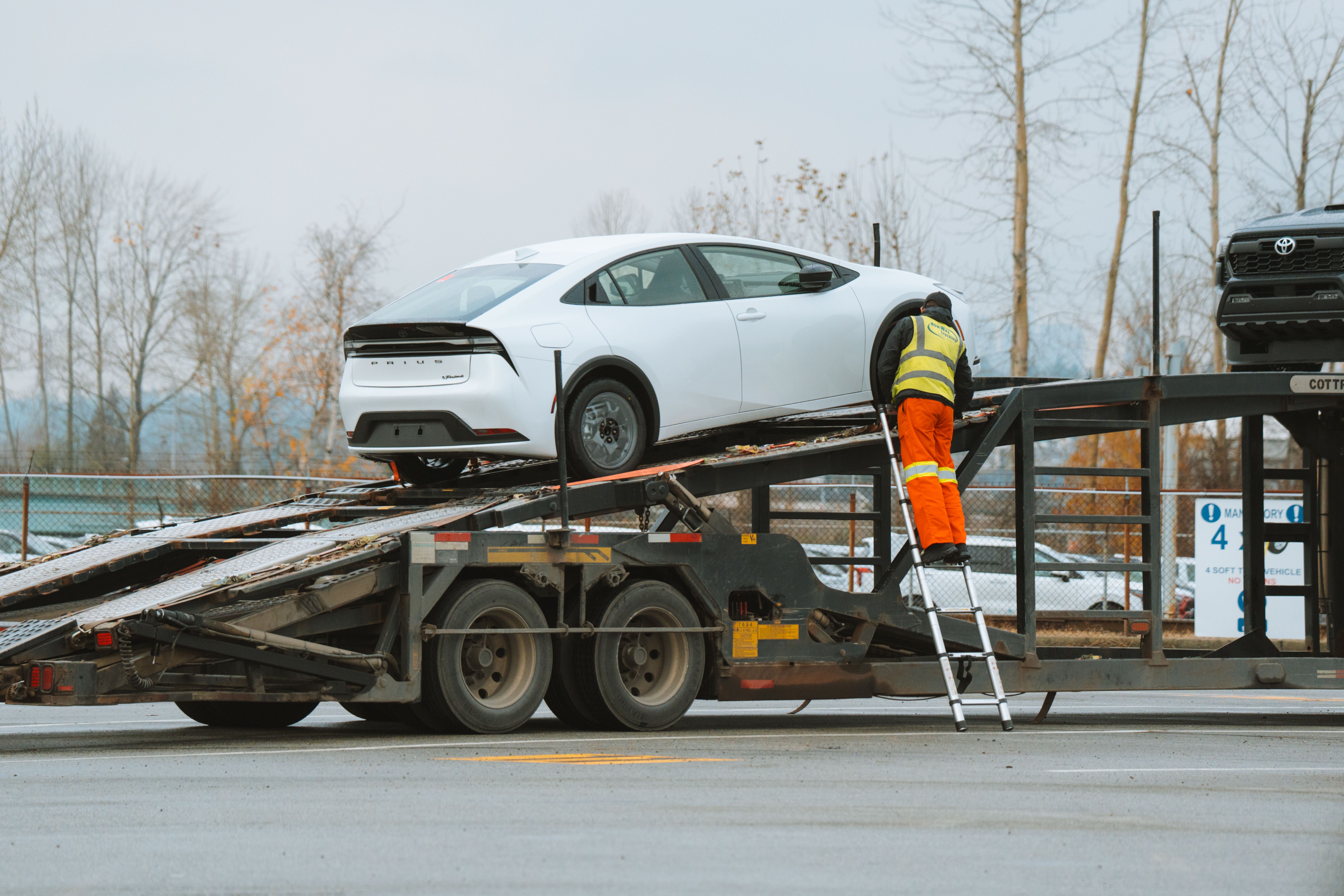
Identify the Colorado property and California city, address and contact. A home, dealer and storage yard can have different release hours and acceptance conditions. Ask the operator to assess both approaches and suggest an authorized alternative if required.
Choose the receiving place before estimating the trip
-
Separate the car from the owner’s travel schedule
Do not use a state-to-state map estimate as the carrier’s promised route or completion time.
-
Check the vehicle’s owner paperwork
Confirm when keys, seller release and access will all be available. Arrange another authorized person if you leave before collection. Disclose mechanical problems and modifications so the quote includes the right handling.
-
Compare accepted scopes
California DMV’s out-of-state vehicle guide describes a registration process separate from delivery. Review the vehicle and transaction requirements with DMV before assuming a newly arrived car is ready for immediate road use.
-
Keep seller or lienholder documents accessible and ask who is supplying
Keep seller or lienholder documents accessible and ask who is supplying them. A carrier condition report is evidence of handover, not a replacement for ownership documentation.
-
Send pickup photographs to the receiver and agree the procedure for
Send pickup photographs to the receiver and agree the procedure for reporting a delivery discrepancy.

Start with the exact Colorado release condition
A Colorado origin can mean a city residence, mountain home, repair facility, dealership, or storage property, and each creates a different collection problem. Tell the carrier where the car physically sits, whether it starts and moves normally, and what kind of access the transporter has. If snow, grade, gate restrictions, narrow roads, or a private driveway make the property questionable, ask for an approved meeting point rather than assuming the truck will reach the door. Decide who can bring the vehicle to that point and whether the car is suitable for that short drive under current conditions.
Choose the California destination around the owner’s next task
Decide whether the car is going to a residence, dealer, repair shop, storage facility, or another recipient. Obtain hours and acceptance instructions for a business delivery. If the owner is moving into California, keep registration, insurance, inspection, and any ownership work on a separate checklist so the vehicle’s physical arrival does not become a substitute for those requirements. If the car is being purchased rather than relocated, confirm seller release and document handling before the Colorado pickup. The transporter should not be used as the mechanism for resolving a payment or title dispute.
Control the schedule with people, not optimistic dates
Long-distance timing should be managed through available representatives and update rules. Ask when the carrier contacts the Colorado releaser, how the California receiver is notified, and what happens if the estimate changes. Name backups when travel or work schedules are tight. If an alternate delivery point becomes necessary, identify who has authority to approve it. Do not schedule an appointment that requires the car to be present until you understand whether the provider has given an estimate or a written date commitment.
Turn this plan into comparable transport options
Use the actual vehicle, pickup and delivery details, timing and handling needs so every quote starts from the same scope.
Review the order as a chain of accepted responsibilities
Before paying, verify the vehicle description, equipment choice, collection location, California handoff, payment schedule, cancellation terms, waiting or storage rules, and damage-reporting process. Photograph the car at Colorado release and retain the signed condition report. Send that evidence to the California receiver, who should inspect before completing delivery paperwork. If the car is nonrunning, modified, or unusually low, make sure the special loading plan is written into the order rather than left for the driver to discover.
Review California arrival as a change of responsibility
The moment the carrier hands the car to the receiver, responsibility shifts to the customer or the next facility. Decide in advance whether the receiver will drive the vehicle, place it in storage, deliver it to a shop, or wait for the owner. Make sure keys, access instructions, and insurance arrangements fit that plan. If the vehicle should not be driven, do not choose an alternate meeting point that assumes otherwise.
For a purchase, relocation, or long-stored vehicle, the receiver should also know which issues belong to the seller, carrier, or owner. A missing document is not a transport damage claim; a new exterior mark is not a registration problem. Keeping those responsibilities separate helps the right party act quickly. The written condition record marks the end of the carrier’s custody and is therefore a useful boundary for the rest of the move.
Verify the California receiver can act for the owner
If someone else will accept delivery, make sure that person is authorized to inspect, sign, and contact the owner before accepting a material change. Give the receiver the approved endpoint and the limits of what may be changed without permission. This is especially important when the car is being purchased, repaired, or placed into storage, because the person meeting the truck may not otherwise know which part of the larger transaction is theirs to approve.
Check the vehicle’s owner paperwork
California DMV reference
Compare accepted scopes
| Quote item | Resolve before booking |
|---|---|
| Method | Open or enclosed, with disclosed handling needs |
| Timing | Ready date, collection window and receiving availability |
| Price | Included work, payment events and change conditions |
| Exception | Waiting, storage or an unavailable property |
Quote item: Method
Resolve before booking: Open or enclosed, with disclosed handling needs
Quote item: Timing
Resolve before booking: Ready date, collection window and receiving availability
Quote item: Price
Resolve before booking: Included work, payment events and change conditions
Quote item: Exception
Resolve before booking: Waiting, storage or an unavailable property