
Give the provider your final city and address, even if you are considering port collection. Request the available discharge location for the actual vehicle and sailing. Do not assume that any California vehicle terminal appears in every operator’s itinerary.
Choose the endpoint that suits your move
-
Make Honolulu acceptance predictable
Compare the full cost of collecting and driving against a booked road transfer. Include your travel, collection availability and any need for another person to receive the car. If the mainland leg is separately booked, identify who will authorize that carrier to collect.
-
Keep arrival administration out of the transport assumptions
Keep dated photographs and the acceptance record. Arrange your trip away from the terminal after dropping off the car; do not rely on keeping access to it once accepted.
-
Wait for release before sending a collector
Ask how vehicle availability is communicated, what identification or authorization the recipient needs and when storage charges begin. A scheduled vessel arrival does not establish that the car can immediately be collected.
-
For address delivery
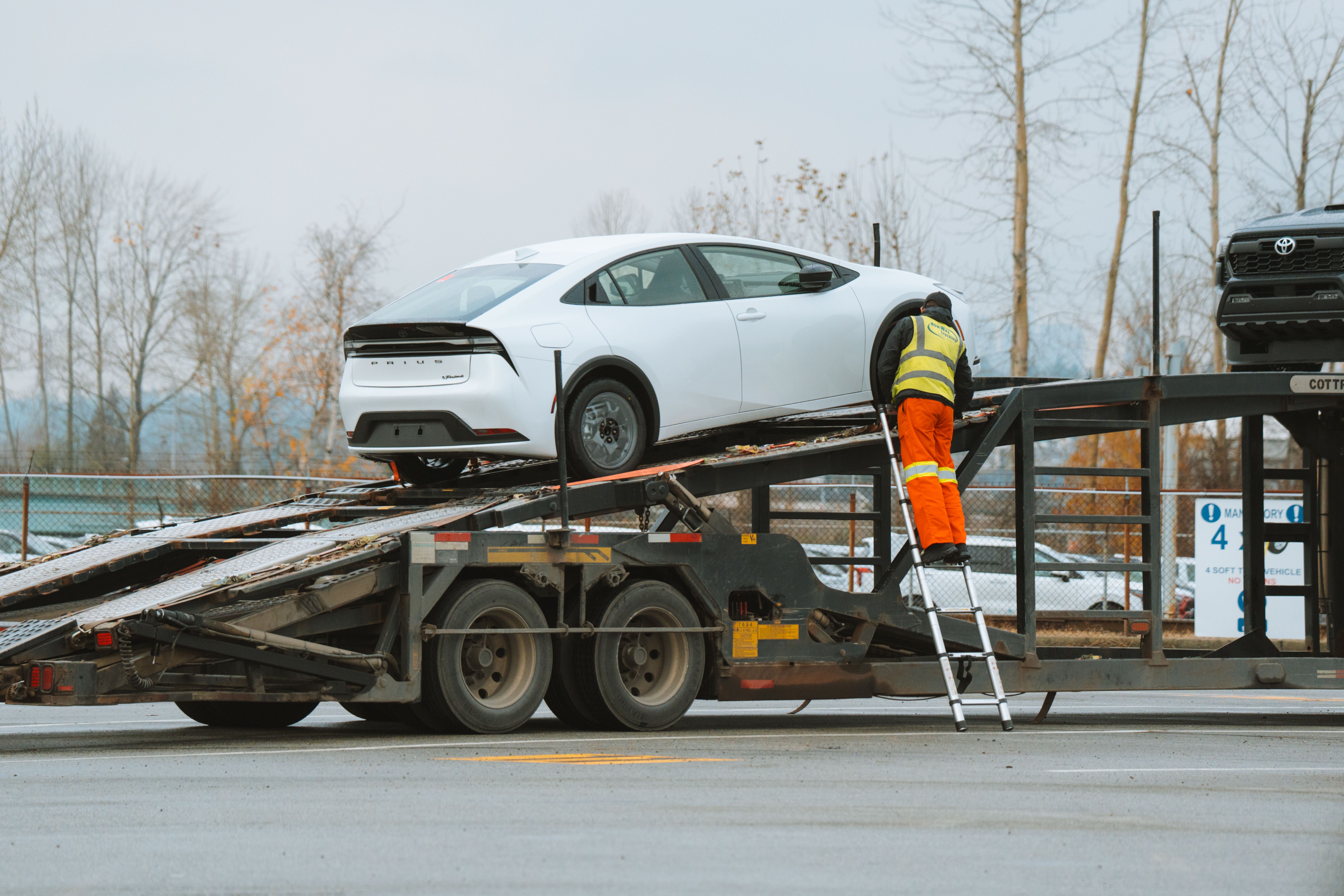
For address delivery, have the road dispatcher confirm the location and equipment. If a large trailer cannot use the property, agree a permitted meeting point and the short transfer. Compare the car with the departure record at each accessible handoff and document discrepancies before completing receipt paperwork.
-
California DMV’s new-resident guidance says a vehicle previously registered elsewhere must
California DMV’s new-resident guidance says a vehicle previously registered elsewhere must be registered within 20 days of becoming a resident or bringing it into the state. Check the DMV’s instructions for your circumstances rather than treating shipping paperwork as registration. California DMV new-resident guidance
-
Review applicable inspection
Review applicable inspection, emissions, ownership and insurance steps before moving, especially if this is a recently purchased vehicle. Keep necessary documents accessible. The ocean or road carrier’s delivery confirmation does not decide whether the vehicle satisfies registration requirements.
-
Before payment
Before payment, obtain the complete sea-and-road total, cancellation terms, storage exposure and claim contacts. Choose the itinerary whose final handoff you can actually carry out, not simply the lowest ocean-only price.
Make Honolulu acceptance predictable
- Confirm the vehicle receiving address and cutoff shown on your booking.
- Resolve ownership and agent authorization, including lender or lessor permission where applicable.
- Disclose dimensions, modifications and whether the vehicle runs and can be handled normally.
- Follow the ocean operator’s fuel, cleanliness, battery and belongings instructions.
Decide whether “California” means terminal release or final delivery
Honolulu-to-California transport is incomplete as a plan until the mainland endpoint is defined. Confirm the California port or terminal used by the ocean service and decide whether you will collect the vehicle there or arrange another road leg. If the final destination is inland, give the road carrier the real address and receiver rather than asking for a vague statewide continuation. Ask whether the quoted amount includes only ocean movement, terminal release, mainland transport, or all of those components.
Turn this plan into comparable transport options
Use the actual vehicle, pickup and delivery details, timing and handling needs so every quote starts from the same scope.
Make the Honolulu terminal handoff deliberate
Check current terminal and ocean-carrier instructions before arriving with the vehicle. Confirm identification, ownership or authorization documents, keys, personal-property restrictions, fuel or charge requirements, alarms, dimensions, and operability. If someone else presents the car, make sure that person has the required authority and understands the inspection process. A terminal appointment should not be treated like an ordinary curbside pickup; the vehicle must meet the receiving process of the ocean service.
Choose who is responsible after California release
If the owner will not collect the car personally, identify the authorized person or road carrier and provide whatever release reference the terminal requires. Ask how you learn that the vehicle is actually available rather than merely arrived. Storage exposure can depend on release timing, so understand facility rules and avoid sending a road carrier based on a guess. If the car will be transferred to another carrier, create a clear custody handoff with condition documentation.
Match the final handoff to the vehicle’s condition
A running standard car can be easier to move from a terminal than a disabled, very low, oversized, or heavily modified vehicle. Tell the mainland provider what condition will be presented and what loading assistance is needed. Confirm that the final property can accept the chosen road equipment. If it cannot, agree on a legal meeting point and decide who handles the remaining distance. The downstream plan should not depend on the vehicle being drivable unless that is actually true.
Use records to connect the ocean and road contracts
Photograph the vehicle before Honolulu acceptance and retain the terminal condition record. At California release, inspect before another carrier takes possession when practical, and create a second record for the road leg. Send those documents to the final receiver. Keep invoices and written changes for each segment. This makes it possible to distinguish ocean charges from road charges and to trace any condition issue through the specific custody periods instead of treating the whole movement as one opaque shipment.
Plan the California release day around authorization, not arrival headlines
A vessel or terminal status update may indicate progress without meaning the car is ready for immediate pickup. Wait for the release process required by the provider and make sure the authorized collector has the correct reference and identification. If a road carrier will collect the vehicle, verify that the terminal recognizes that arrangement. Sending a truck before release is confirmed can create waiting costs or a missed collection.
After release, inspect the vehicle before beginning a long drive when practical. Check visible condition, keys, and obvious operating concerns. If another road carrier takes custody, create a condition record at that point. Keeping terminal release separate from final California delivery makes schedule, cost, and responsibility easier to understand.