
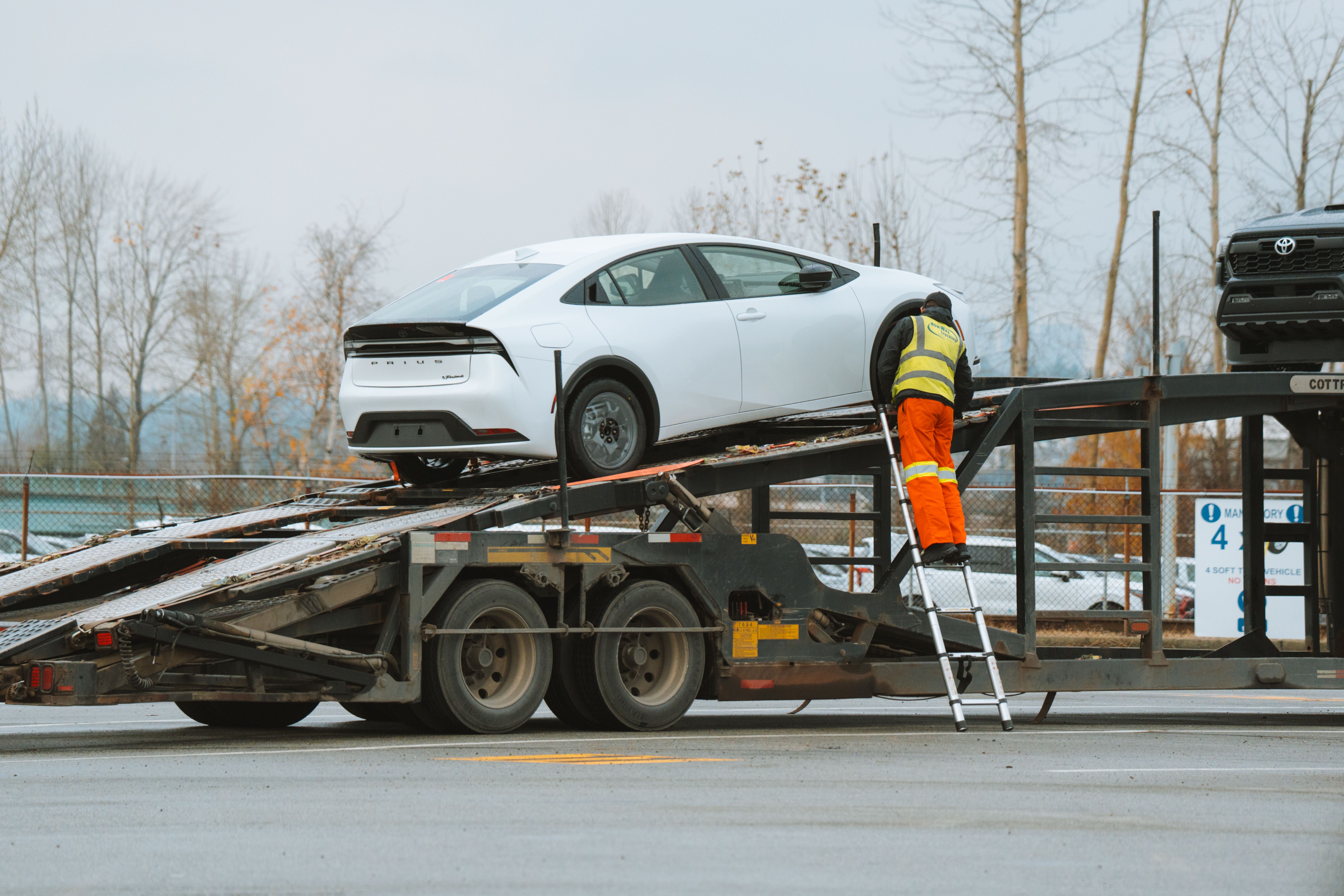
If the origin directions involve a parkway, give the carrier the address and let it choose a permitted commercial approach. Do not send a passenger-car shortcut as truck routing. Confirm any separate transfer needed to reach the truck before arranging the San Francisco receiving space.
Check the New York commercial approach first
-
Send the receiver a complete New York record
NYSDOT warns that commercial vehicles cannot use New York State parkways. NYSDOT parkway restrictions
-
Confirm applicability before relying on a reservation
SFMTA asks for at least five business days for new temporary-sign requests and says those signs do not override existing parking and traffic regulations. SFMTA temporary signage
-
Define the last movement to the property
Describe the actual truck and activity to the agency. Ask the operator for the needed space and timing and assign who handles approval. A moving-van process should not automatically be treated as permission for every auto-transport arrangement.
-
If the destination curb is unsuitable
If the destination curb is unsuitable, agree another lawful unloading place with permission. Decide who meets the driver there and whether the car can be driven afterward. For a nonrunning vehicle, obtain a named transfer provider and its charge.
-
Ask what happens if arrival falls outside the reserved period
Ask what happens if arrival falls outside the reserved period. Identify who can approve storage or a new location and how the revised charge is confirmed.
-
Name the origin municipality and physical collection address
Name the origin municipality and physical collection address; do not assume New York means NYC. Confirm keys, release authority, operating faults and modifications. Compare the same equipment, endpoints and ready window, with payment and cancellation terms.
-
Retain pickup photographs and the signed condition sheet and send them
Retain pickup photographs and the signed condition sheet and send them to an authorized San Francisco recipient. Give that person the balance-payment and discrepancy instructions before the car arrives, so delivery does not depend on your own travel timing.

Make the San Francisco street plan fit the assigned transporter
A reserved curb or posted area does not prove that a particular transporter can reach or use the site. Give the assigned carrier the exact San Francisco address, street grade, garage or driveway details and any planned temporary controls. Ask what equipment will arrive and whether the driver accepts the location. If not, choose a larger legal meeting area and decide how the car reaches the final property. A low, modified or nonrunning vehicle may make that last movement a separate logistics problem.
Do not let New York origin assumptions leak into the quote
State the actual New York municipality and pickup property. A New York City origin can raise commercial-route and curb questions that do not apply to an upstate residence, dealership or storage site. Confirm who has keys and release authority and whether a business has specific hours. The route label should not silently become NYC-to-San Francisco if the vehicle is elsewhere in the state.
Turn this plan into comparable transport options
Use the actual vehicle, pickup and delivery details, timing and handling needs so every quote starts from the same scope.
Plan the timing relationship between transport and city controls
Ask how much notice the carrier gives before San Francisco delivery and how changes are communicated. If a temporary parking arrangement or property reservation must be made in advance, build a fallback for a changed arrival. Clarify who can reschedule the local arrangement and whether an alternate handoff would change the transport price. Do not force an early city reservation into becoming a false guaranteed transport appointment.
Keep equipment, access and price in the same comparison
Compare open and enclosed options using the same vehicle condition and endpoints. Disclose ground clearance, dimensions that matter, and whether the car starts, rolls, steers and brakes. Ask whether special loading affects where the truck can unload in San Francisco. Review payment, cancellation, waiting and storage terms along with the line-haul total. A quote is useful only if the method and final access plan match.
Carry New York condition evidence into the city handoff
Photograph the car before pickup and keep the signed inspection record. Send both to the San Francisco receiver. The receiver should have enough time to inspect before moving the vehicle into a garage, storage facility or another person's custody. If delivery moves to a different approved site, retain the written change. That keeps the transport condition record tied to the actual custody transfer rather than to an address that was never used.
Separate the San Francisco curb decision from the vehicle’s final parking
The place where the transporter unloads may not be the place where the car can remain. Before arrival, decide whether the receiver will move the vehicle into a garage, private lot, legal street space or another facility. If the vehicle should not be driven, arrange the next movement rather than selecting a meeting point that assumes normal road use. This distinction matters in dense areas where unloading can be brief but parking options are limited.
Give the receiver the New York pickup record and a clear plan for that first local movement. Inspect before the car enters a garage, valet system, shop or storage operator’s custody. If a later problem appears, the owner can then separate the carrier’s delivery condition from anything that happened after the car left the transport handoff.
Review the final San Francisco plan after carrier assignmentSend the assigned carrier the planned curb, temporary-control details, vehicle condition and any low-clearance or special-loading information. Ask whether that specific equipment can use the location. If not, revise the handoff before the New York pickup. A different trailer or driver does not automatically invalidate the plan, but it can change turning, stopping and ramp-space needs. Rechecking the location at assignment helps prevent a city-access problem from becoming a last-minute price or custody dispute.