
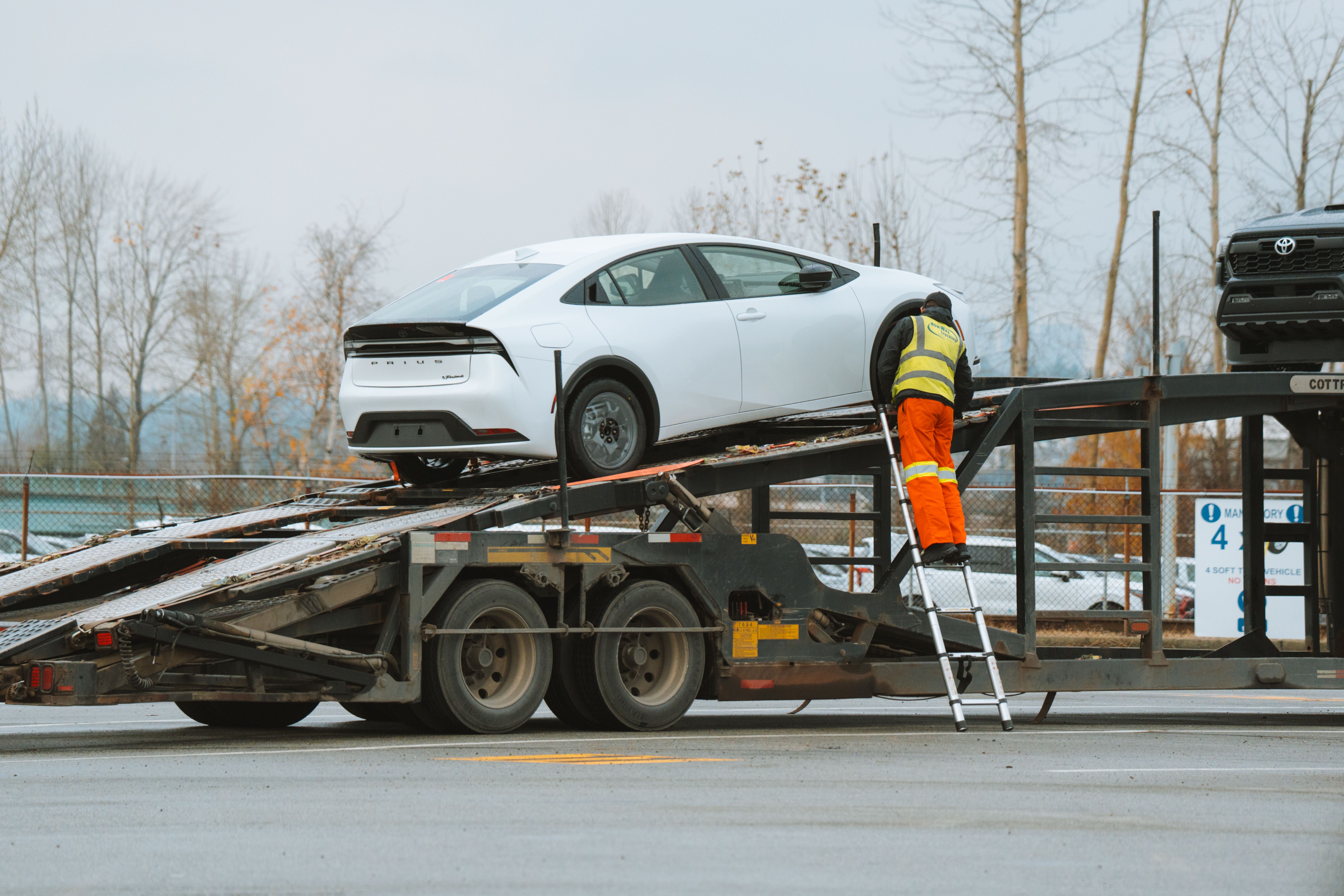
Identify the Ohio town, pickup contact and California delivery ZIP before asking for a firm proposal. A dealer lot, private driveway and storage yard need different release arrangements. Ask whether the receiving address is available throughout the delivery window; a flight arrival time is not a workable substitute for a local receiver.
Turn the two states into a shipment
-
Check the vehicle before paying to move it
If you are moving your own car, photograph its condition and keep a spare key. For a purchase, have the seller confirm that payment, paperwork and release authorization will be complete before the transporter arrives. Do not use a carrier booking to pressure an unresolved sale into completion.
-
Compare the work behind the price
California DMV restricts registration of noncertified vehicles acquired by California residents below 7,500 miles, subject to exemptions. California DMV nonresident vehicle requirements
-
For a low-mileage purchase
For a low-mileage purchase, obtain a photograph of the emissions label and discuss the particular vehicle with DMV before booking. Do not assume every out-of-state car is prohibited, or that adding miles after purchase fixes an eligibility problem. Keep registration decisions separate from a transporter’s willingness to carry the car.
-
At delivery
At delivery, compare the vehicle with the Ohio photographs and note discrepancies on the handoff record. If the receiver cannot drive it away, arrange lawful storage or a suitable onward move before dispatch.

Compare the work behind the price
- Specify open or enclosed carriage, including any clearance problem or aftermarket modification.
- Disclose whether the car starts, steers, rolls and brakes; describe the actual fault rather than writing only “non-running.”
- Request the pickup window, total agreed charge, cancellation conditions and payment stages in writing.
- Confirm the responsible hauling company and the procedure for documenting damage and submitting a claim.
Check the Ohio purchase before treating shipping as the last step
For a purchase, confirm the VIN, seller identity, payment status, title or lien path, keys and current operating condition before booking collection. If California eligibility or registration rules could affect the decision to buy, resolve those questions using the vehicle's actual records. Do not send a carrier to pick up a car that you may later discover cannot serve the intended California purpose. Transport should follow a sound purchase decision, not substitute for one.
Turn the Ohio pickup address into release instructions
Identify the exact lot, garage, dealership entrance or residence where the car sits and the person authorized to release it. Confirm business hours and whether a large transporter can access the property. Tell the provider about nonrunning condition, low clearance, oversized tires or modifications. If special loading is needed, get the method accepted before a driver is assigned. A clean pickup starts with the same physical description used in the quote.
Turn this plan into comparable transport options
Use the actual vehicle, pickup and delivery details, timing and handling needs so every quote starts from the same scope.
Design the California handoff around the next use
Decide whether the vehicle is going to a residence, dealer, repair shop, storage facility or another recipient. Confirm hours and access. If the car cannot be driven legally or mechanically from an alternate meeting point, arrange the next movement separately. Keep any California inspection, registration, emissions or ownership task on its own checklist so delivery is not mistaken for administrative completion.
Compare what each price actually includes
Use identical endpoints and vehicle conditions for competing quotes. Ask whether open or enclosed transport is proposed, who the carrying company is, how schedule updates work, and what cancellation, waiting, storage or rescheduling rules apply. If one offer assumes a terminal or broader pickup window, account for that difference. The cheapest line-haul price may not be the cheapest complete movement once customer-side handling is included.
Preserve the seller-to-buyer condition record
Ask the Ohio seller or representative to photograph the vehicle before pickup and review the carrier's inspection. Send the record to the California buyer or receiver. At delivery, compare the car before signing and use the carrier's reporting process for transport-related differences. Keep seller listing photos, pickup evidence and delivery evidence distinct so the stage at which a condition existed can be evaluated.
Give the California buyer a decision point before the vehicle leaves Ohio
Once the seller confirms the vehicle and paperwork, the buyer should make a deliberate go/no-go decision before pickup. Check that the agreed VIN, condition, release authority and California-use questions are resolved well enough to justify transport. If an unresolved issue could materially change the purchase, delay shipping rather than relying on the carrier’s arrival to create urgency. This protects both the buyer and the transporter from becoming part of a transaction dispute.
After the decision is made, send the Ohio seller the final carrier instructions and send the California receiver the expected condition record and handoff plan. A clean transition from purchase decision to transport execution keeps commercial, transport and state-administrative responsibilities distinct.
Verify the California handoff can support the purchased vehicle’s actual conditionA newly bought car may arrive with limited fuel or charge, unfamiliar controls, warning lights or a mechanical issue that was disclosed in the sale. Choose a destination where the buyer can inspect and, if needed, leave the vehicle without immediately driving it. If an alternate meeting point is used, make sure the buyer has a realistic way to move the car from there. This is separate from transport damage review and belongs to the buyer’s post-delivery readiness plan.