
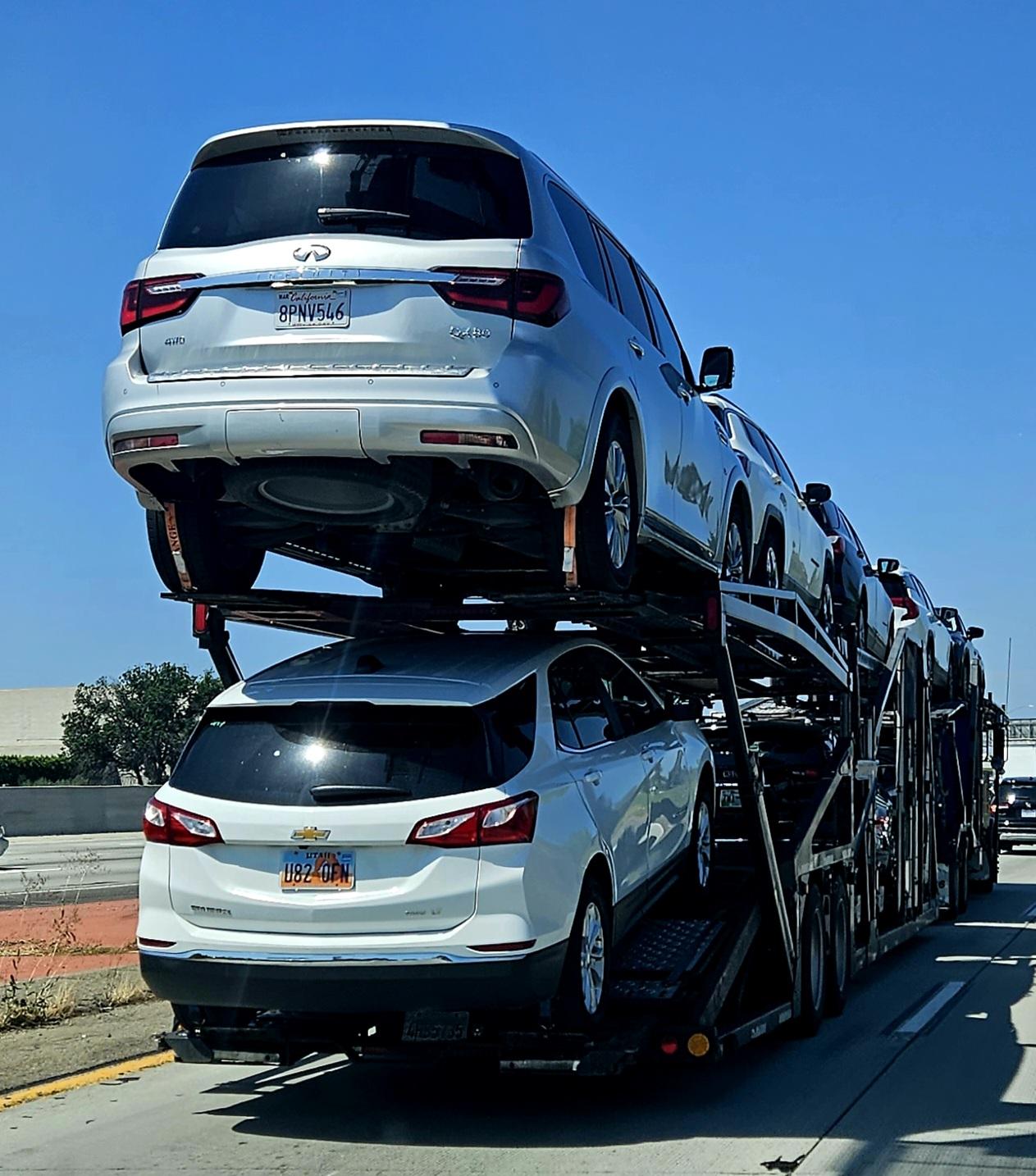
Give the provider the complete pickup address and ask it to repeat that location in the offer. If Vancouver, Washington is intended, request the domestic service for that address. Do not accept a quote whose assumptions point to a different Vancouver.
Make the origin unambiguous
-
For a domestic Vancouver-to-Seattle move
Also state where in the Seattle area the car must be received. Include the vehicle’s operating condition and any controlled-access property at either end, so the location clarification leads to a usable transport scope.
-
If you mean Vancouver, British Columbia
CBP publishes requirements for importing a motor vehicle into the United States, including vehicle compliance and entry documentation. CBP motor vehicle import guidance
-
Check the agreement against the clarified request
Ask the provider whether it handles that cross-border service and which party is responsible for the applicable import process. Resolve the intended use and status of the vehicle with the relevant authorities; a transport quotation is not a finding that it may be permanently imported.
-
Do not apply a domestic handoff agreement to a Canadian origin
Do not apply a domestic handoff agreement to a Canadian origin by changing only the address. Border documentation, responsibility and timing need explicit treatment. This conditional note does not assign a country to the unqualified Vancouver in your request.
-
Agree the pickup window
Agree the pickup window, the receiving contact and the equipment that accepts the car. Ask whether the haul is scheduled separately or combined with other dispatch work, and what confirms the collection appointment.
-
If a property cannot accommodate the transporter
If a property cannot accommodate the transporter, have an alternative assessed and permitted by its owner. Decide who gets the car there before accepting that change, particularly if it is not drivable.
-
Compare the exact endpoints
Compare the exact endpoints, total, payment stages and cancellation terms. Obtain the assigned carrier’s identity through the booking contact before releasing keys. Keep the pickup photographs and signed record for the recipient’s inspection. Stop to correct an origin mismatch before any payment or collection commitment.
Resolve which Vancouver you mean before anything else
This route has an unusual first decision because “Vancouver” can describe a domestic Washington origin or a Canadian origin. Put the full street address, state or province, postal code, and country in the request and require the written offer to repeat them. If the origin is Vancouver, Washington, the move can be scoped as a domestic pickup to Seattle. If the origin is Vancouver, British Columbia, do not let a domestic quote survive by merely changing the address: border entry, vehicle admissibility, documentation responsibility, and the provider’s cross-border capability become separate questions.
Turn this plan into comparable transport options
Use the actual vehicle, pickup and delivery details, timing and handling needs so every quote starts from the same scope.
For the Washington-to-Seattle version, define the two physical handoffs. Ask whether the transporter can safely use the pickup street and the Seattle destination, and agree on a permitted alternative before dispatch if either location is unsuitable. A meeting point only helps when the car can reach it and the owner or authorized contact can get home afterward. For a nonrunning vehicle, a distant parking lot can create a second tow that was never included in the first price.
Keep the short distance from hiding operational details
A geographically short move can still fail at the handoff. State the vehicle’s running condition, dimensions if modified, pickup availability, and the Seattle receiver’s schedule. Ask how assignment is confirmed, which company actually carries the vehicle, and how the releasing person verifies that identity. Put payment stages, cancellation terms, and any waiting or storage exposure in the same written comparison as the transport total.
If the Canadian origin is the intended one, use the official border and vehicle-import information already cited on this page as a separate compliance track. Determine who prepares or presents required documents, whether the vehicle is being imported permanently or moved under another status, and whether the transport provider handles that service at all. Do not use a carrier quote as proof that a vehicle is eligible for U.S. entry. The transport decision is complete only when the origin identity, legal route, physical handoffs, and payment responsibility all describe the same move.
Use the written scope to prevent a Vancouver identity error
Before paying a deposit or authorizing pickup, read the origin line, route description, and any tax or border language together. A domestic Washington booking should not suddenly contain customs assumptions, while a British Columbia booking should not omit the border entirely. If the provider uses an abbreviated city label, require the full address in the final order so dispatch cannot assign the wrong service from a shorthand place name.
For the domestic route, also decide whether Seattle delivery is to a residence or a business with fixed hours. A short mileage estimate can create false confidence about timing; the operational question is whether both parties can meet the same truck on the same day. Ask how a delay or failed access attempt is communicated and what costs, if any, follow from a second handoff attempt.
Finally, make the route label unambiguous in every message that matters. Use “Vancouver, WA to Seattle, WA” for the domestic move or the complete British Columbia origin for the cross-border move. This small discipline matters because dispatch notes, payment receipts, and carrier assignments may be reviewed by different people. The more consistently the geography is stated, the less chance that a correct initial conversation becomes an incorrect operational order.