
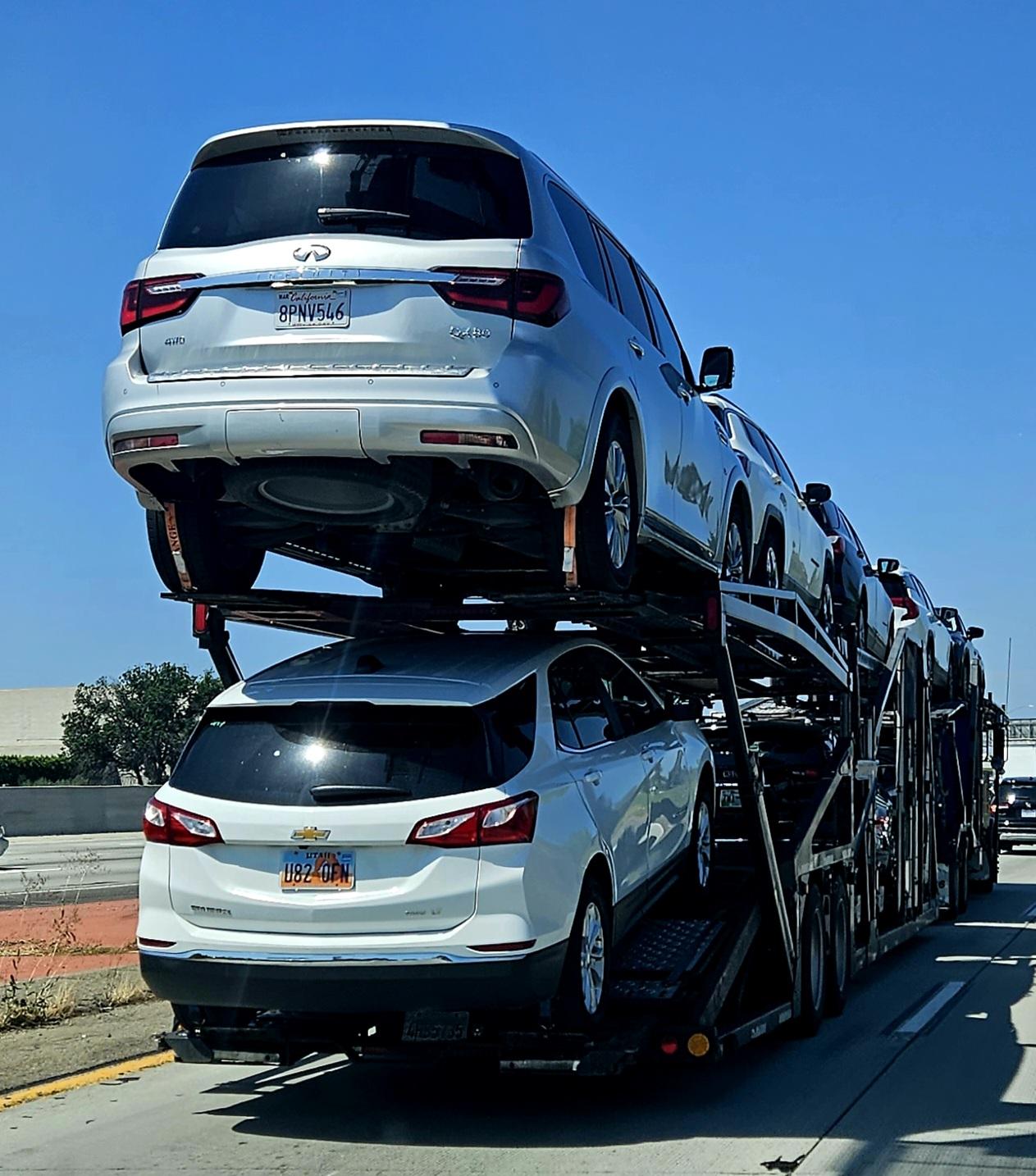
Provide the collection address, Florida destination, vehicle model, operating condition and first release date. Name the people available at each end and disclose property restrictions. Tell the provider about clearance modifications or loading problems before asking for a firm service description.
Describe the car and both ends
-
Compare the cheapest feasible arrangement
If the destination is only a temporary stay, give the dates when the property can receive the car. If you cannot move the car to a meeting point, say that explicitly.
-
Read the commitments behind the total
Ask for written totals for the same equipment and endpoints. If a less expensive version uses different handoff points or wider date windows, check whether your contacts and vehicle can use it. Keep necessary loading assistance in the comparison.
-
Prepare the two handoffs
Question to settle: Who gets the car to the carrier’s chosen collection point?
-
Handle Florida paperwork separately
Question to settle: Who has custody, when is it charged and who approves it?
-
Question to settle
Question to settle: Does the car reach the property or must the receiver move it onward?
-
No single Florida shipping price or cheapest provider is established without
No single Florida shipping price or cheapest provider is established without those inputs.
-
Identify the arranging business and the hauling company when assigned
Identify the arranging business and the hauling company when assigned. Ask what confirms collection, which dates remain estimates and what cancellation or reassignment terms apply. Agree how additional work is authorized before payment.
-
Follow the provider’s authorization process for anyone acting for the owner
Follow the provider’s authorization process for anyone acting for the owner. Retain photographs and the collection record, and send them to the Florida recipient. They should inspect the car, record observed differences and keep the delivery document. Plan a substitute receiver if the offered window exceeds one person’s availability.
-
Florida’s registration guidance treats proof of ownership and title documentation as
Florida’s registration guidance treats proof of ownership and title documentation as part of the vehicle-administration process. FLHSMV registration and ownership guidance
-
Consult the current requirements for your own ownership
Consult the current requirements for your own ownership, residency and intended use. A transport receipt is evidence of a shipment, not completion of title or registration work. Keep the records you need accessible rather than leaving important originals loose in the car.

Compare the cheapest feasible arrangement
| Possible exclusion | Question to settle |
|---|---|
| Origin transfer | Who gets the car to the carrier’s chosen collection point? |
| Holding or waiting | Who has custody, when is it charged and who approves it? |
| Florida local movement | Does the car reach the property or must the receiver move it onward? |
Possible exclusion: Origin transfer
Possible exclusion: Holding or waiting
Possible exclusion: Florida local movement
Turn this plan into comparable transport options
Use the actual vehicle, pickup and delivery details, timing and handling needs so every quote starts from the same scope.
Florida delivery should be priced to the actual city, not the state
Florida spans many markets and access conditions, so give the provider the final city, ZIP code, and property before accepting a final quote. A South Florida condo, Orlando-area home, dealer, auction, storage lot, or smaller coastal community may require different appointment or handoff arrangements. If the destination is still uncertain, label early pricing as provisional and have it updated when the address is known.
Describe the vehicle in terms that affect loading and protection. State whether it runs, rolls, steers, and brakes, along with low clearance, modified suspension, oversized tires, or unusual dimensions. Ask whether open transport is the quoted service and whether an enclosed option makes sense for the specific car. A cost comparison is only useful when the equipment and destination assumptions match.
Compare the total transport obligation, not just the headline number
Ask each provider to identify what is included at pickup and delivery, when payment is due, what can change the total, and what happens if the truck cannot reach the destination. If a meeting point is proposed, name it and determine whether the receiver can legally and practically use it. A nonrunning vehicle may need a local transfer that should be visible in the plan rather than discovered at delivery.
Give the Florida receiver the pickup photographs, condition report, booking reference, and arrival instructions. The receiver should inspect before signing and know how to report a discrepancy. Near the move, current weather or road disruptions may affect a handoff, but they should be handled as specific operational changes rather than generic claims about Florida transport. Title, registration, insurance, and purchase requirements remain separate from the carrier’s movement of the car.
Use Florida geography only where it changes the handoff
Do not add generic beach, hurricane, or seasonal language simply because the destination is Florida. What matters is the actual receiving address, current conditions, and the access the truck will use. A dense condo area, gated subdivision, dealer lot, or rural property creates concrete questions that can be answered; statewide stereotypes cannot.
If the receiver is flying in or moving on a fixed date, avoid tying travel too tightly to an unconfirmed truck appointment. Arrange a substitute receiver or a realistic buffer. Ask how the provider updates the arrival window and what happens if the receiver cannot meet it. That contingency is more actionable than assuming a precise day from a preliminary estimate.
If the Florida endpoint is near a secured community or private development, ask the receiver whether commercial transporters can enter and where oversized vehicles are directed. The best time to learn that rule is before dispatch. A known gate restriction can be solved with a nearby handoff; a surprise restriction can leave the driver and receiver searching for space while the vehicle is already on the truck.