
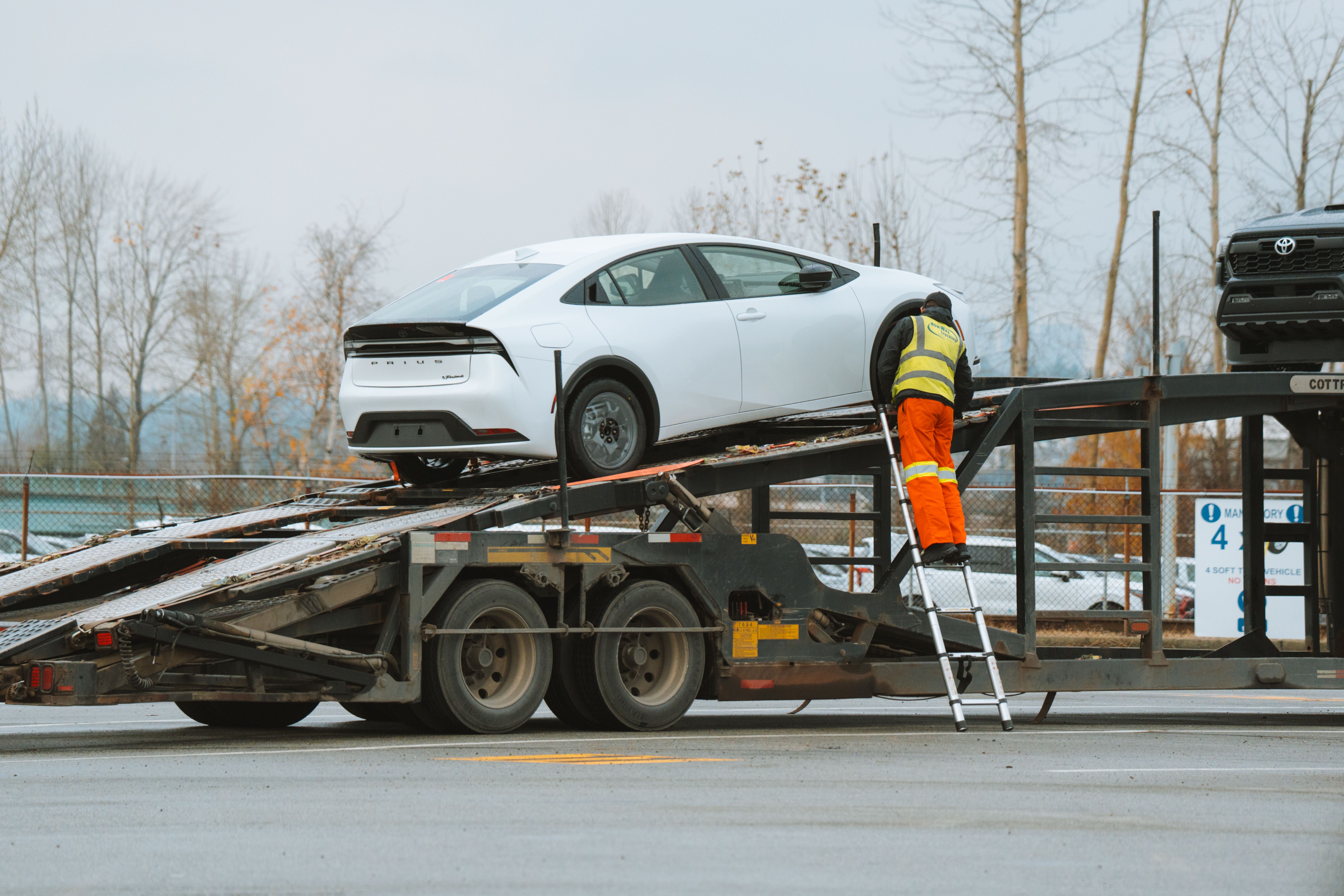
Give the transporter a California pickup ZIP code, the Chicago delivery address, vehicle details and the earliest release date. Ask for an unloading location that the actual carrier can accept before you commit to a delivery plan. A Chicago street address alone is not proof that a loaded vehicle transporter can stop there.
What to arrange first
-
Treat the Chicago stop as part of the booking
Chicago publishes size and weight restrictions for large vehicles; its official dataset specifically says the map is not the authority for deciding whether a permit is required. Have dispatch check the approach and stopping location for its equipment. Do not use a passenger-car route or a map screenshot as permission to unload.
-
Compare the same delivery promise
Question to resolve: Who releases the vehicle if the owner has already left California?
-
Protect the two inspections
Question to resolve: Which amount is due at reservation, pickup and delivery?
-
Leave room for a changed arrival window
Photograph the bodywork, wheels and odometer before the California handoff. Keep a copy of the collection condition record and send it to the Chicago receiver. At delivery, compare the vehicle with that record and document any new issue before completing the receipt. Ask the contracted transporter for its claims contact and procedure rather than assuming the booking agent handles claims.
-
Request the dispatch contact and notice you can expect
Request the dispatch contact and notice you can expect before arrival. If nobody can receive the vehicle, agree on the procedure and any storage charges in advance. This guide does not establish a fixed California-to-Chicago price or travel time; those require the actual locations, dates and accepted vehicle specification.

Treat the Chicago stop as part of the booking
- Send the entrance location, street photographs and any building loading instructions.
- Ask whether the receiver needs to meet at another agreed location.
- Arrange permission from the property operator before treating a private lot as a handoff site.
Chicago official dataset reference
Compare the same delivery promise
| Offer detail | Question to resolve |
|---|---|
| Chicago delivery | Exact address or an agreed meeting point? |
| Collection window | Who releases the vehicle if the owner has already left California? |
| Transport type | Does the offer describe open or enclosed equipment? |
| Payment | Which amount is due at reservation, pickup and delivery? |
Offer detail: Chicago delivery
Question to resolve: Exact address or an agreed meeting point?
Offer detail: Collection window
Offer detail: Transport type
Question to resolve: Does the offer describe open or enclosed equipment?
Offer detail: Payment
California pickup and Chicago delivery need two different access checks
Begin with the exact California pickup property and the exact Chicago destination. A transporter may be able to serve one address directly and require a meeting point at the other. Tell the provider about gates, steep or narrow approaches, apartment or garage restrictions, business hours, and limited curb space. Ask for the expected handoff method at both ends before accepting the quote.
Turn this plan into comparable transport options
Use the actual vehicle, pickup and delivery details, timing and handling needs so every quote starts from the same scope.
Chicago delivery deserves its own plan because dense streets and restricted stopping can make a large transporter impractical at some addresses. If the carrier proposes a larger nearby meeting area, identify it in advance, confirm that the receiver can reach it, and make sure the vehicle can leave under its own power. For a nonrunning car, the final transfer may require different equipment or a separate local service.
Keep equipment and scheduling assumptions stable when comparing quotes
State the vehicle’s operating condition, ground clearance, modifications, and whether you want open or enclosed transport. Keep those details identical across proposals. Ask whether the pickup window is an estimate or a commitment, when a specific carrier is assigned, and how the receiver is notified as the truck approaches Chicago. A lower number based on wider flexibility or a different endpoint is not the same service.
At pickup, create a clear condition record and send it to the Chicago receiver. The receiver should know any balance due and inspect the car before signing. Review cancellation, waiting, storage, and damage-reporting terms before dispatch. A coast-to-Midwest move is complete when both properties, both people, and the actual equipment have been reconciled in writing—not when a generic California-to-Chicago distance has been priced.
Coordinate a California delegate if the owner leaves before pickup
For a long interstate move, it is common for the owner’s travel date and vehicle pickup not to line up perfectly. If another person will release the car, give them the booking reference, carrier-verification method, keys, and condition checklist. Decide whether that person may approve a changed pickup location or price, or must contact you first. The distinction prevents a helpful delegate from being pushed into a commercial decision they were not meant to make.
At the Chicago end, use the same discipline with the receiver. They should know the expected endpoint, any balance due, and how to compare the car with the pickup record. If a city access issue forces a different meeting point, the receiver should be able to confirm it is workable before leaving for the handoff.
If either the California release person or Chicago receiver has limited English, hearing, mobility, or other communication needs, decide how updates and signatures will be handled before the truck arrives. A second authorized contact can help, but that person should receive the same booking and condition information. Accessibility planning is part of a workable handoff, not an issue to discover during a time-sensitive exchange.