
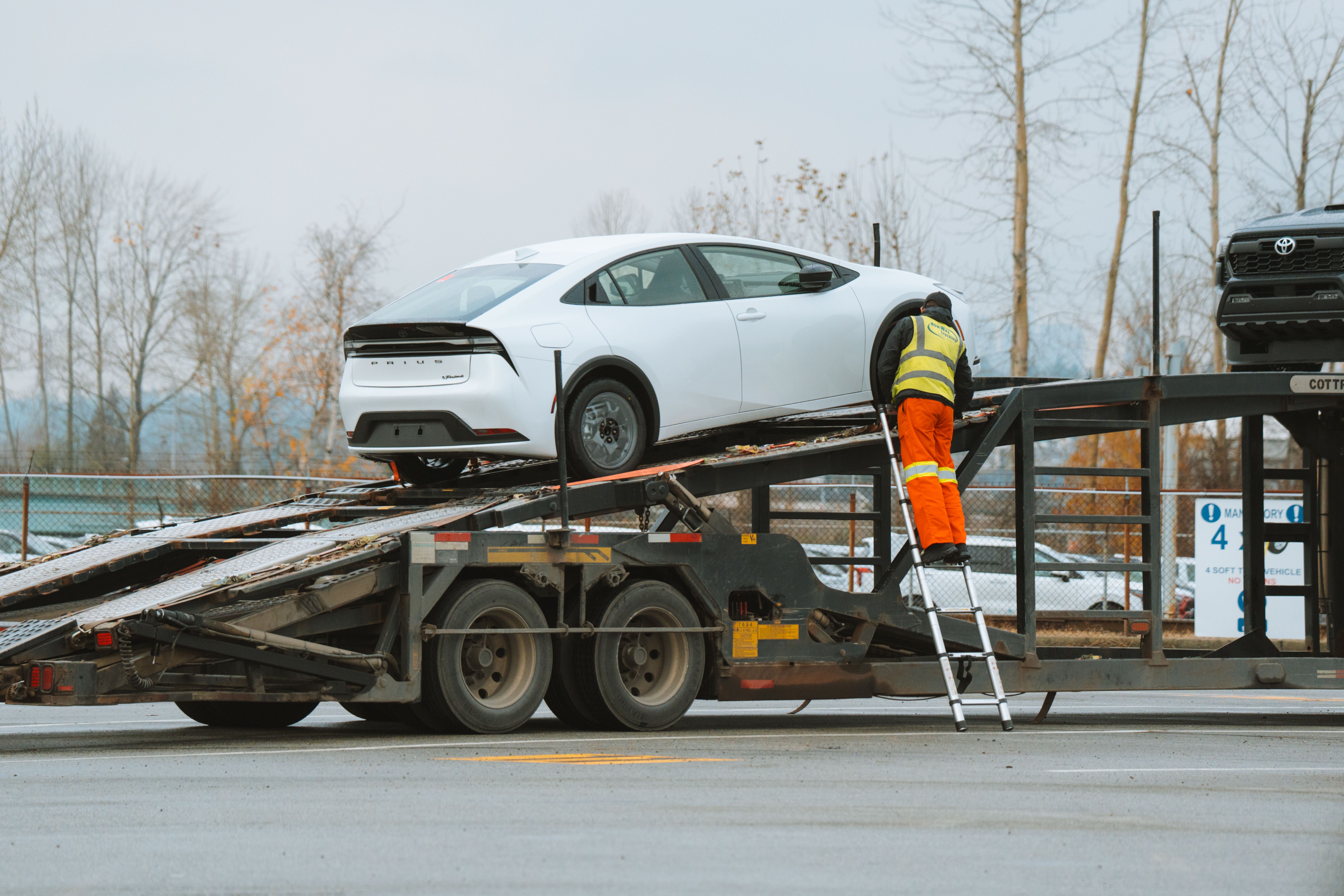
Tell the transporter whether collection is from a home, dealership, auction or storage facility. Provide its opening hours, release contact and any authorization needed. Confirm that the car starts, rolls, steers and brakes, and describe modifications affecting loading.
Set the release conditions before dispatch
-
Arrange receipt at a usable address
Have the driver approve a loading position. If you leave Chicago first, appoint someone who can inspect and release the car rather than relying on an unattended key exchange.
-
Keep California paperwork outside the transport assumption
Give the operator the San Diego street address and property contact. A building with underground parking may still need a separate outdoor handoff. Confirm permission to unload and decide who moves the car from the handoff point to its parking space.
-
Compare the same collection-to-delivery scope
California DMV has a distinct process for registering a vehicle previously registered elsewhere. Review the requirements for your car and circumstances before assuming delivery makes it ready for local road use. Keep ownership and prior-registration documents accessible rather than packed away with household goods.
-
If further checks or paperwork are needed
If further checks or paperwork are needed, arrange suitable storage or onward transport. Do not instruct a receiver to drive a vehicle whose road-use status has not been resolved.
-
Ask each bidder to use the same vehicle
Ask each bidder to use the same vehicle, addresses, date flexibility and carriage method. Record who contracts with you, who will physically carry the car, and what changes if assignment or access is delayed. Review total charges, payment milestones and the process for reporting damage.
-
No fixed journey time or universal Chicago-to-San Diego rate is promised
No fixed journey time or universal Chicago-to-San Diego rate is promised. A useful booking gives both contacts clear responsibilities and a channel for updates.

Arrange receipt at a usable address
- Receiver available through the agreed delivery window.
- Alternative contact if your travel is delayed.
- Storage or a revised delivery arrangement if housing is not ready.
- Pickup photographs available for the arrival inspection.
Keep California paperwork outside the transport assumption
California DMV reference
Close the Chicago release before the car is assigned to a truck
Tell the provider exactly where the vehicle sits: residence, dealer, auction, repair shop or storage facility. Each can have different release authority, balances, gate procedures or business hours. The Chicago auto-transport page can help organize origin questions, but the booking should name the real property and person who can hand over the keys.
If the car was purchased or repaired, confirm that the property is actually authorized to release it and that any separate payment or document issue is resolved. The carrier collecting a vehicle is not proof that ownership paperwork is complete. If the owner leaves Chicago before pickup, appoint a representative who can verify the collecting information, inspect the vehicle and sign the condition record without being forced to decide a title or seller dispute.
Turn this plan into comparable transport options
Use the actual vehicle, pickup and delivery details, timing and handling needs so every quote starts from the same scope.
Describe the car as it will be loaded. State whether it starts, rolls, steers and brakes and disclose clearance or body changes. If enclosed transport is part of the comparison, use the site’s enclosed-transport guide to ask about equipment and protection, but keep the same vehicle facts for every bidder. A special-loading requirement should be accepted before dispatch, not negotiated beside the truck.
Make the San Diego handoff workable before California paperwork is complete
Give the carrier the exact San Diego receiving property and contact. The San Diego transport page can help frame local access questions. If a building garage or street cannot accommodate the transporter, agree on an outdoor handoff and decide who moves the car to its final parking place. A vehicle that is not road-ready may need a tow, shop or storage destination instead.
The California DMV source already cited belongs on the owner’s post-arrival checklist. Let the receiver close the transport with custody and condition records even if registration or other road-use tasks remain open. Do not instruct a delegate to drive the car merely because the truck has unloaded it; the onward plan should match the vehicle’s legal and mechanical status.
Send the Chicago pickup photographs and signed inspection record to the San Diego receiver. Give that person the verified carrier identity, payment method and claims contact. If an observed discrepancy appears, document it before the car is moved again. If the receiver cannot attend, establish a substitute or storage plan before the delivery window.
Verify the assigned business using the site’s company-checking guide. Compare offers for the same Chicago property, San Diego property, vehicle condition, equipment and timing flexibility, including cancellation, waiting, storage and changed-location terms. The route is task-complete when ownership or DMV work can continue separately without putting the transport handoff itself in doubt.
Keep seller or facility release evidence with the transport record
If the Chicago origin is a dealer, auction, shop or storage facility, keep written confirmation that the vehicle was ready and authorized for release when the carrier arrived. Record any balance or gate requirement separately from the transport charge. That helps distinguish a failed carrier pickup from a property that was not actually prepared to release the car.
Give the San Diego receiver the same origin information that matters to custody: keys included, known mechanical limitations, pickup condition and any documents traveling with the vehicle. Ownership paperwork that should not travel in the car can be sent by a separate secure method. The receiver should know what to expect without carrying responsibility for the seller transaction.
If the vehicle is delivered before the owner reaches California, use a receiver or facility that can hold it safely. A successful long-haul delivery should not create a new emergency because the car is not yet registered, repaired or ready to enter its final parking space. Close the interstate handoff first, then proceed with the next owner task.