
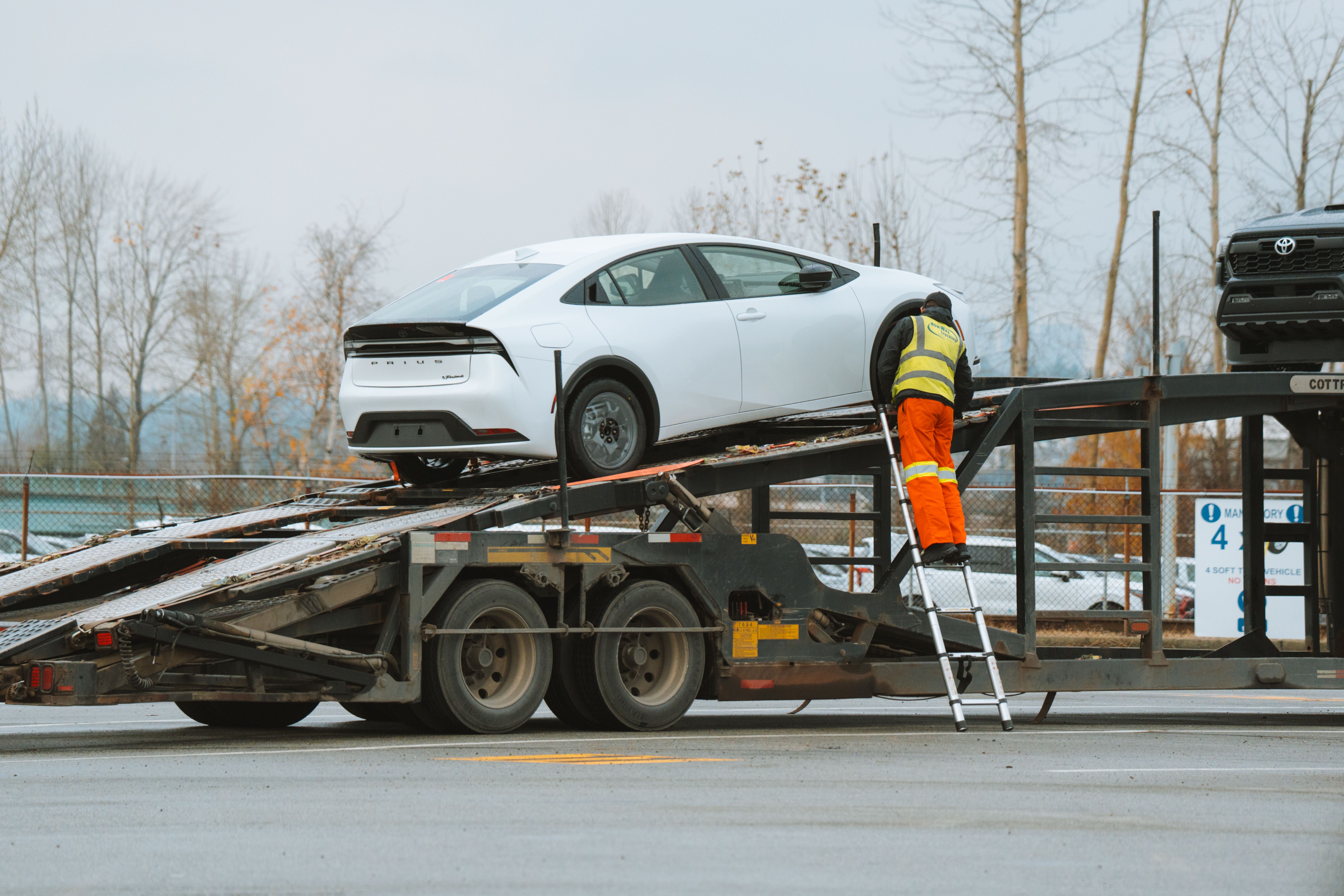
For Tacoma-to-Anchorage car shipping, decide whether your service begins at a Washington property or at the marine terminal and whether it ends at the Anchorage terminal or at another address. Those choices determine who handles local road moves, terminal appointments, release and any storage exposure.
Write the Tacoma-to-Anchorage service boundaries before booking
-
Tacoma boundary
State whether you self-deliver or a carrier collects. If collection is included, confirm the exact terminal and who is responsible for meeting its acceptance window.
-
Ocean boundary
Use the booked operator's vehicle-condition, document and preparation rules. The ocean leg should have a named service and a clear condition record.
-
Anchorage boundary
Confirm release location, collector authority and whether onward delivery is included. If not, treat the terminal as the end of one service and the start of another.

Turn this plan into comparable transport options
Use the actual vehicle, pickup and delivery details, timing and handling needs so every quote starts from the same scope.
Plan the Anchorage handoff around the car's actual arrival condition
For Tacoma-to-Anchorage transport, the receiver should know what happens if the vehicle cannot be driven away when it is released. A weak battery, a mechanical issue discovered after transit or a paperwork problem can change the last step even when the transport itself was completed normally. Confirm in advance whether the receiving location can accommodate a tow or local carrier, who is allowed to sign for the vehicle, and how long the release window remains practical. Keep the Tacoma condition photos and the receiving inspection together so a mechanical problem is not automatically confused with transit damage. A terminal-to-terminal shipment needs this last-mile fallback more explicitly than an address-to-address move.
Mark the boundaries of the booking
| Segment | Question to resolve |
|---|---|
| Tacoma release | Will you deliver to a named receiving terminal, or will a truck collect the car? |
| Ocean segment | Which operator, acceptance instructions and booking reference govern this leg? |
| Anchorage handoff | Is collection at the terminal required, or is onward transport included? |
Segment: Tacoma release
Question to resolve: Will you deliver to a named receiving terminal, or will a truck collect the car?
Segment: Ocean segment
Question to resolve: Which operator, acceptance instructions and booking reference govern this leg?
Segment: Anchorage handoff
Question to resolve: Is collection at the terminal required, or is onward transport included?
Obtain the total for the scope you need, including any separately contracted road legs. Ask who coordinates a missed terminal cutoff or a changed sailing and who approves the resulting costs.
Confirm release permission before going to the port
The Port of Alaska describes its Anchorage facility as secure and says visitors must show government-issued photo identification at the security gate. Port of Alaska visitor security information
Identification for entering a secure facility is not the same as authorization to collect a particular vehicle. Ask the ocean operator for the customer pickup location, release documents, available hours and instructions for a substitute collector. Do not use the port administration address as an assumed vehicle collection point.
Get instructions for this car
Request the operator’s current requirements for fuel, keys, alarms, personal contents, cleanliness and vehicle condition. Report an electric vehicle, a modified car or a starting problem before booking. No universal fuel level or acceptance promise should replace the instructions applicable to your shipment.
Photograph the car before its first handoff. If it passes between a road carrier and an ocean operator, ask how the condition records at that transfer will reach you.
Distinguish arrival from availability
Ask what notification confirms that the car can be collected. A vessel arrival estimate alone is not a release notice. Arrange onward travel only around the operator’s confirmed collection procedure, and find out when any storage charges would begin under your terms.