
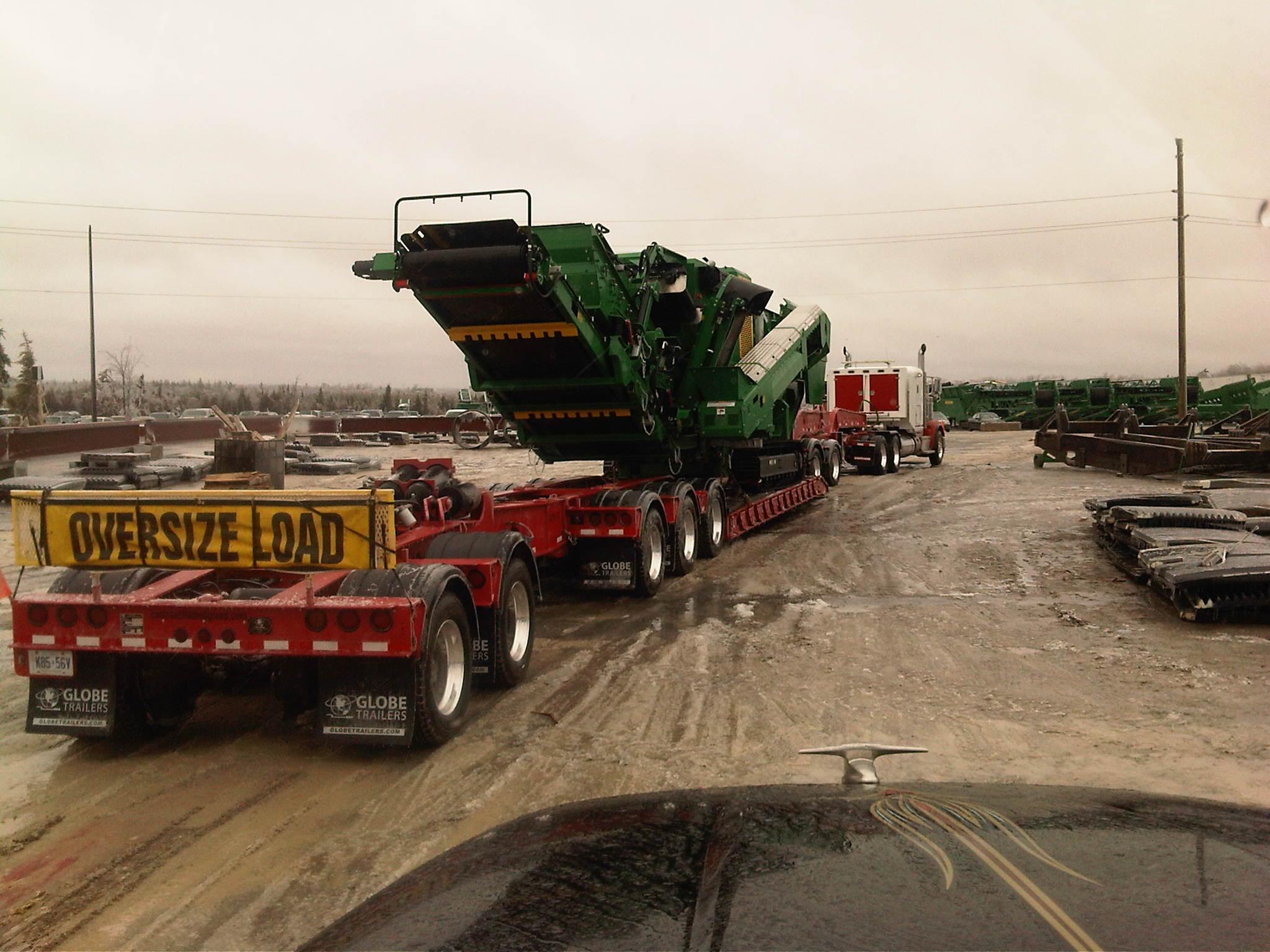
Compare international heavy equipment shipping companies by their accepted machinery configuration and their responsibilities from collection through destination unloading. Require a workable method, named intermediaries and clear exclusions. A port-to-port price does not establish that the machine can enter the destination or reach the final site.
Build the machine file first
Provide the manufacturer, model, serial number, operating condition, weight and measured transport dimensions. Identify detachable buckets, blades, counterweights or other attachments. Ask a qualified party to define any disassembly and reassembly work, including the resulting dimensions and separate pieces.
Tell bidders whether the machine can move under its own power, whether it leaks, and what loading equipment is available. Avoid choosing a vessel service before the operator has accepted those facts.
Make the transfer points visible in the offer
Request a responsibility schedule beside the quote. It should identify who prepares the equipment, who books the inland vehicle, who receives it at the departure facility, who handles the ocean documentation and who arranges release at destination. If one company coordinates the move, still ask which tasks it performs and which it subcontracts.
A delay at one boundary can affect several later bookings. Ask who can approve storage, reschedule a lift or change the delivery truck, and how you will receive the revised cost before work proceeds. Keep serial numbers consistent across the inventory, condition record and shipping documents. Use the heavy-equipment transport cost guide to organize the inland and handling questions; it does not replace destination-specific import advice.
Preparation
Dimensions after disassembly
Exporter and qualified preparerDeparture facility
Accepted receiving slot
Inland and ocean handoffArrival facility
Release and final unloading
Importer and destination operatorAsk why the proposed method fits
| Proposed arrangement | Decision to resolve |
|---|---|
| Container | Can the prepared machine fit, be loaded and secured within the accepted limits? |
| Roll-on/roll-off | Does the operator accept its mobility, dimensions and condition? |
| Flat rack or other project cargo | Who provides lifting, support, securing and weather protection? |
Turn this plan into comparable transport options
Use the actual vehicle, pickup and delivery details, timing and handling needs so every quote starts from the same scope.
These are options to discuss, not a claim that every route or vessel offers each method. Request written acceptance of the actual shipment.
Check the role of the ocean intermediary
The Federal Maritime Commission maintains lists for ocean transportation intermediaries. Match the company’s legal name and relevant role in the official list when US ocean intermediary requirements apply. A listing is a regulatory check, not a recommendation or proof that the company has suitable machinery-handling expertise.
Ask who issues the ocean transport document, who controls the inland truck and which destination agent handles release. Request a single escalation contact for a missed connection or rejected load.
Federal Maritime Commission reference
Clear the export and arrival questions before loading
Have the exporter and importer identify the documents, ownership evidence and destination admission requirements for this machine. Ask about cleaning, inspection and any engine or equipment restrictions applicable to the destination. Do not assume a sale invoice alone establishes permission to import.
If timber packing or support material is used, ask the packing supplier about the destination’s requirements. APHIS explains that US exporters must determine whether the receiving country requires ISPM 15-compliant wood packaging.
USDA APHIS reference
Compare the cost through final unloading
- Separate collection, dismantling, packing and export handling.
- Record ocean charges, coverage terms and shipment validity.
- Allocate terminal handling, customs work, examinations and storage if delayed.
- Confirm the delivery truck and unloading equipment after release.
- Identify who reinstalls attachments and records condition at each transfer.
Approve the quotation only when exclusions have named owners. A low port-to-port price cannot be compared fairly with a fully coordinated delivery.