
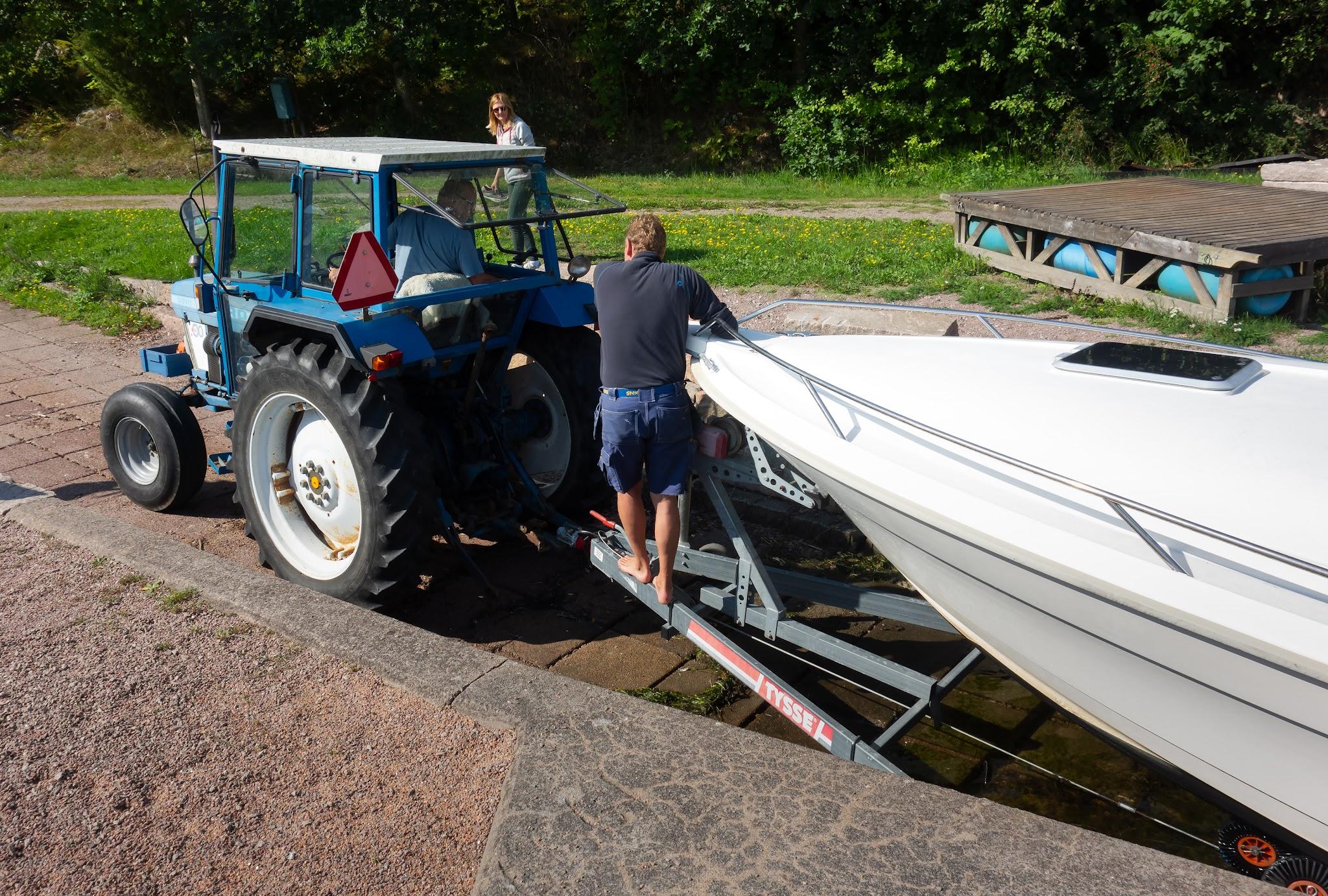
Michigan boat transport should be quoted from the boat’s travel configuration, including its support and any removable projections. Decide what comes off, who does that work, and which trailer or cradle will carry the vessel before dispatch.
Measure the boat as it will travel
Send the hauler the model, current location, weight information and transport dimensions. Explain whether the boat travels on its own road trailer or needs a carrier-supplied trailer or cradle. Identify removable items such as an arch, mast or other projections and have the yard confirm who can remove and reinstall them.
The combined transport height is not necessarily the boat’s catalog height. Ask the hauler and yard to establish the loaded configuration before route or equipment acceptance.
Set the Michigan loading responsibility before the hauler arrives
A workable boat transport michigan plan starts with the boat in its transport configuration, not its in-water description. For Michigan, ask the hauler to reconcile loaded dimensions, trailer or cradle configuration and removable gear with the equipment it proposes and to identify any measurement that is still estimated. For Michigan, if a permit or route review becomes necessary, it should follow that loaded profile rather than a generic claim about boats of similar size.

The handoff is equally important. Before the Michigan handoff, use yard, marina, lift and trailer responsibilities to decide who controls the boat before loading and after unloading, whether a trailer is supplied with the boat, and what happens if a yard appointment changes. In the Michigan plan, put lift or storage charges beside the transport quote so the complete movement can be compared.
| Decision | Clarify | Acceptance test |
|---|---|---|
| Michigan profile | Michigan: loaded dimensions, trailer or cradle configuration and removable gear | Loaded dimensions and support are explicit |
| Origin handoff | Michigan: yard, marina, lift and trailer responsibilities | Yard or owner responsibilities assigned |
| Road move | Equipment, route and quoted extras | Hauler accepts the complete movement |
Make the lift sequence one agreed plan
| Stage | Responsibility to settle |
|---|---|
| Before collection | Haul-out, preparation and safe support while waiting |
| Loading | Lift appointment, trailer positioning and approved support arrangement |
| Road movement | Operator, route assessment and required permissions |
| Arrival | Receiving lift or unloading equipment, storage and later launch |
Turn this plan into comparable transport options
Use the actual vehicle, pickup and delivery details, timing and handling needs so every quote starts from the same scope.
Stage: Before collection
Responsibility to settle: Haul-out, preparation and safe support while waiting
Stage: Loading
Responsibility to settle: Lift appointment, trailer positioning and approved support arrangement
Stage: Road movement
Responsibility to settle: Operator, route assessment and required permissions
Stage: Arrival
Responsibility to settle: Receiving lift or unloading equipment, storage and later launch
Do not book the receiving launch solely from an estimated truck arrival. Ask how the yard handles a late arrival and who pays for a missed lift slot.
Separate state permission from the last road
MDOT issues oversize and overweight transport permits for loads exceeding the applicable legal limits. Its permit conditions do not authorize travel on county roads or city streets; those roads require attention to the relevant authority.
Have the transporter assess the whole route from the collection yard to the receiving yard. A state-road permit cannot by itself settle the final approach to a marina, nor can it establish whether that property has suitable unloading space.
Michigan DOT reference
Check the restrictions for the actual move
Michigan publishes seasonal load restrictions, and local agencies can have their own restrictions and timing. Ask the hauler to recheck the planned roads when scheduling a spring movement. Do not treat a previous season’s restriction notice as the current position or infer that every boat shipment is overweight.
Michigan DOT reference
Protect the boat and the handover
Inventory loose equipment with the yard and follow the agreed preparation instructions. Photograph condition before loading and at receipt. Compare quotes only after lift work, dismantling, transport, permit work if applicable, unloading and storage responsibilities are allocated. Keep the receiver’s contact available to the driver throughout the delivery window.