
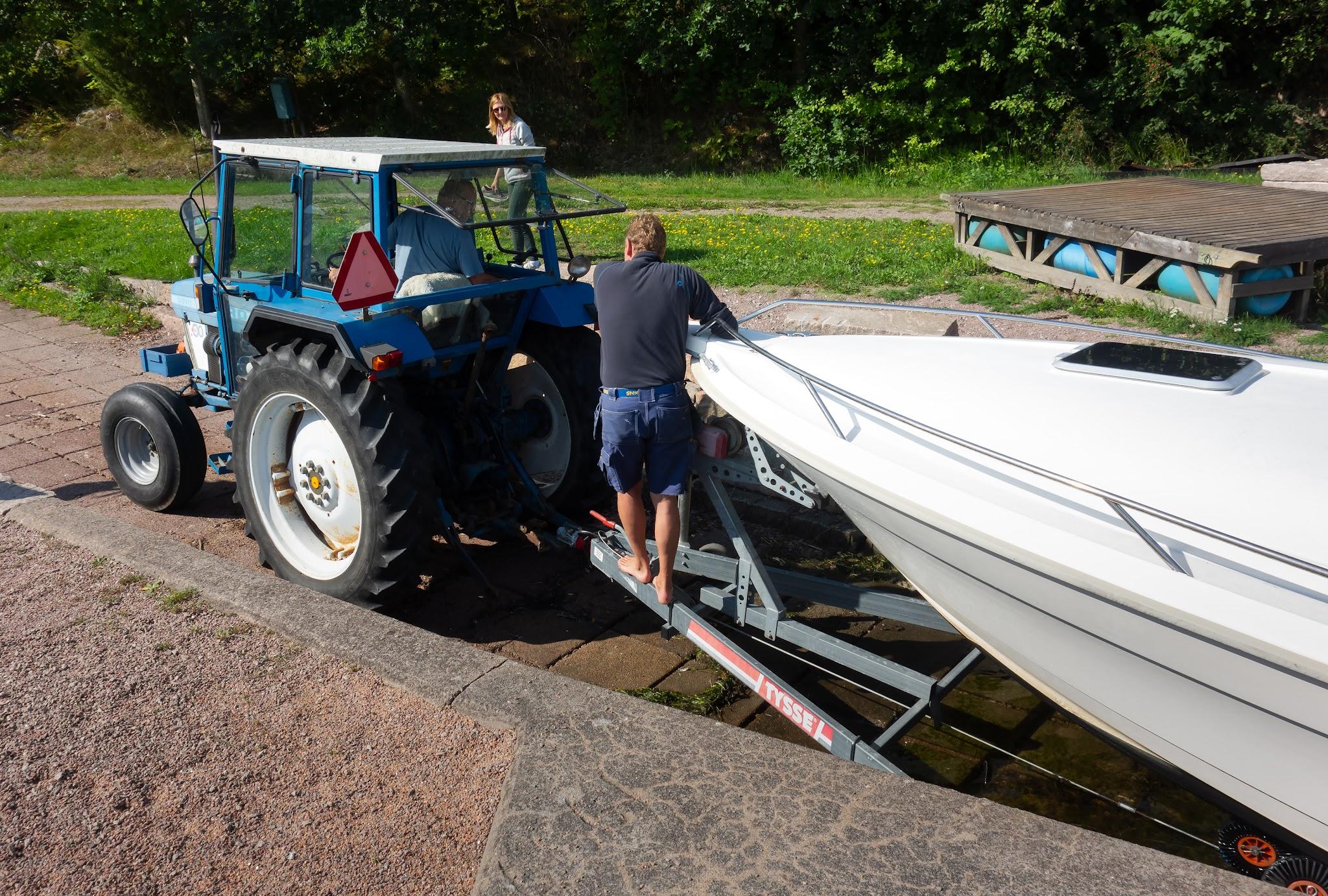
New Jersey boat transport needs a defined road-ready configuration before a carrier can price or accept it. Set the loaded dimensions, support method, and responsibility for removing or securing projecting components.
Decide what travels and how it is supported
Provide the boat’s weight, beam and loaded height, with the proposed trailer or cradle included where relevant. Identify masts, arches or other components to be removed. Ask the yard and hauler to agree who prepares those items and secures separate equipment.
If the boat’s own trailer is used, arrange a condition assessment rather than assuming it is suitable because it supported the boat in storage.
Quote the New Jersey boat in the configuration that will actually travel
For boat transport nj, record the loaded boat configuration that will travel: hull dimensions, trailer or cradle status, removable items and any support that changes height or width. Before the New Jersey handoff, use loaded dimensions, trailer or cradle configuration and removable gear to identify who supplies each measurement and who accepts it. On the New Jersey move, a hauler cannot price routing or equipment reliably when the boat is described only by model name or nominal length.
For this New Jersey decision, tie the origin and destination to yard, marina, lift and trailer responsibilities. On the New Jersey move, confirm which yard, marina or owner is responsible for lifting, launching, blocking, mast work or trailer preparation when those tasks apply. On the New Jersey move, keep those services separate from the road-haul price unless the written scope explicitly includes them, and give both facilities the same arrival and release assumptions.
New Jersey profile
New Jersey: loaded dimensions, trailer or cradle configuration and removable gear
Loaded dimensions and support are explicitOrigin handoff
New Jersey: yard, marina, lift and trailer responsibilities
Yard or owner responsibilities assignedRoad move
Equipment, route and quoted extras
Hauler accepts the complete movementTurn this plan into comparable transport options
Use the actual vehicle, pickup and delivery details, timing and handling needs so every quote starts from the same scope.
Let the measured load determine the permit enquiry
NJDOT issues oversize and overweight permits, and its permit portal states that it covers state routes. Have the hauler identify the appropriate permissions for the actual configuration and the complete journey, including any local approach to the yard.
A permit category is not a promise of approval. Reconfirm dimensions before application, and ask what happens if the loading arrangement changes.
New Jersey DOT reference
New Jersey permit portal reference
Connect two yard appointments
| Origin yard | Receiving yard |
|---|---|
| Preparation, haul-out and transport support | Unloading equipment and storage or launch plan |
| Contact authorized to release the boat | Contact authorized to inspect and accept it |
| Fallback if the truck is delayed | Fallback if the lift appointment is missed |
Origin yard: Preparation, haul-out and transport support
Receiving yard: Unloading equipment and storage or launch plan
Origin yard: Contact authorized to release the boat
Receiving yard: Contact authorized to inspect and accept it
Origin yard: Fallback if the truck is delayed
Receiving yard: Fallback if the lift appointment is missed
Ask whether the receiving lift needs particular slings or setup information from the origin. Have qualified personnel resolve handling details rather than improvising when the truck arrives.
Price the whole transfer
Compare quotations with removal, loading, road movement, relevant permission work, unloading and any storage clearly allocated. Record who pays for waiting or a failed appointment. Keep departure photographs and the equipment inventory for inspection at receipt.
No statewide boat-hauling rate or guaranteed permit timing is supplied here. The usable price is the one tied to the accepted measurements and agreed yard operations.