
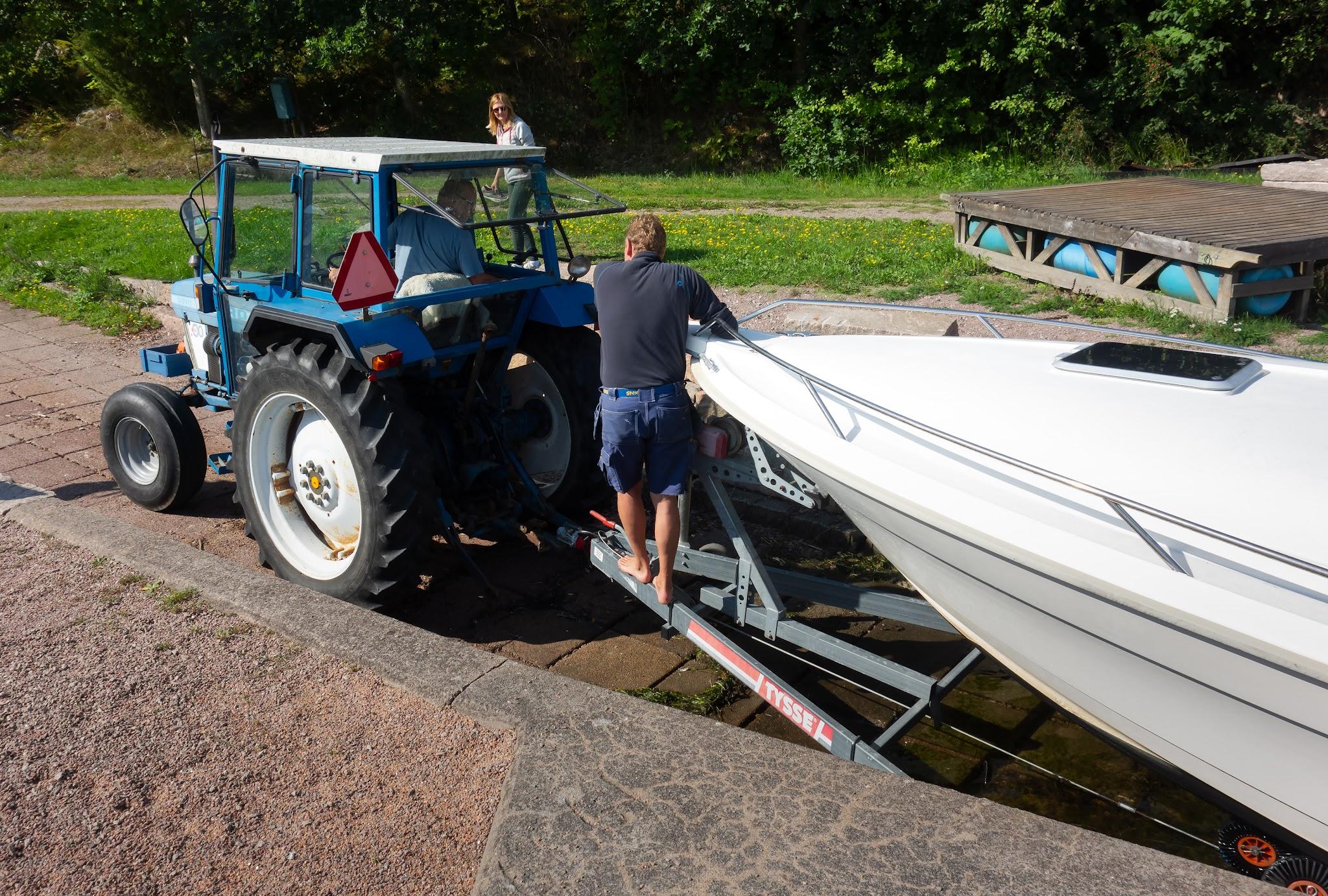
Boat transport in Oklahoma should be based on the vessel’s actual transport configuration. Confirm the loaded dimensions, trailer or cradle plan, and any lift or removal work before the hauler is dispatched.
Specify the boat and trailer arrangement
Give the boat’s model, weight, beam and transport height. Explain whether it is on a roadworthy trailer or needs a carrier-supplied trailer, cradle or lift. Identify projections or components that may need removal and have the responsible yard confirm that work.
A stored trailer should not be offered as ready to tow without an appropriate condition assessment. Let the operator know about tire, brake, bearing or structural concerns before collection.
Connect the Oklahoma yard handoff to the road movement
A workable boat transport oklahoma plan starts with the boat in its transport configuration, not its in-water description. On the Oklahoma move, ask the hauler to reconcile loaded dimensions, trailer or cradle configuration and removable gear with the equipment it proposes and to identify any measurement that is still estimated. On the Oklahoma move, if a permit or route review becomes necessary, it should follow that loaded profile rather than a generic claim about boats of similar size.

The handoff is equally important. For Oklahoma, use yard, marina, lift and trailer responsibilities to decide who controls the boat before loading and after unloading, whether a trailer is supplied with the boat, and what happens if a yard appointment changes. For this Oklahoma decision, put lift or storage charges beside the transport quote so the complete movement can be compared.
Turn this plan into comparable transport options
Use the actual vehicle, pickup and delivery details, timing and handling needs so every quote starts from the same scope.
Oklahoma profile
Oklahoma: loaded dimensions, trailer or cradle configuration and removable gear
Loaded dimensions and support are explicitOrigin handoff
Oklahoma: yard, marina, lift and trailer responsibilities
Yard or owner responsibilities assignedRoad move
Equipment, route and quoted extras
Hauler accepts the complete movementAsk about the loaded combination
Oklahoma’s size and weight permit resources are the official starting point for an oversize or overweight movement. Have the hauler assess the complete boat-and-trailer configuration and identify any required permissions for the actual roads.
Do not assume a permit is needed for every boat or that one permission covers every local road and private entrance. Route approval cannot establish a marina’s loading capacity.
Oklahoma DOT reference
Connect the handling operations
- Origin contact approves preparation and release.
- Hauler confirms the support and loading arrangement.
- Destination contact confirms unloading equipment and space.
- Both yards know what happens if the truck misses an appointment.
Inventory loose equipment and record the boat’s condition before it leaves. Arrange qualified handling rather than expecting the driver to supply unquoted lifting equipment.
Compare the job through receipt
Ask whether dismantling, lifting, route work, transport, unloading and storage are included. Record waiting and rescheduling terms and the person who can authorize extra work. A linehaul-only figure is not comparable with a proposal that coordinates both yards.
Keep launch timing separate from an estimated truck arrival and have the receiver inspect against the departure record.