
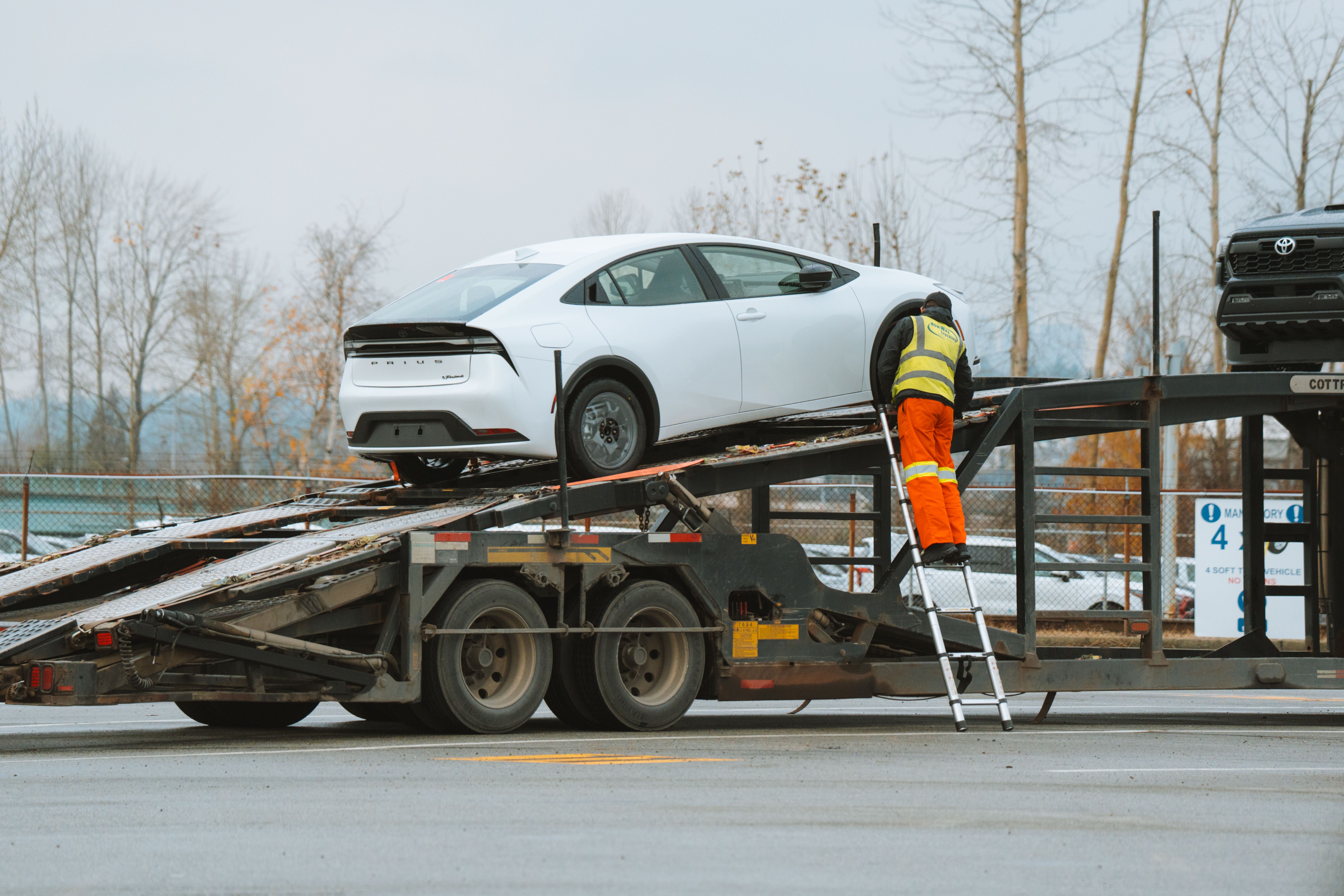
Give both ZIP codes and say whether each address is a home, dealer, auction or storage yard. A quote for delivery to Phoenix should not silently become collection at a distant holding lot. Ask the seller to name the receiving place and any transfer before you pay.
Start with the part of Florida and the actual Arizona destination
-
Choose protection and loading capability together
If you will fly ahead, appoint someone who can release the car in Florida. At the other end, identify who can take the keys, inspect the vehicle and settle any agreed balance. Make that person available for a window, rather than a single appointment the carrier has not accepted.
-
Prepare for the Arizona receiving leg
Question to settle: Is an open-carrier offer acceptable, and what pickup flexibility does it need?
-
Put uncertainty in writing before dispatch
Question to settle: Can the assigned equipment load it at its measured clearance?
-
Question to settle
Question to settle: Does the quoted service include the equipment needed to load and unload it?
-
Question to settle — what / enclosed
Question to settle: What enclosed option and cargo coverage fit this particular vehicle?
-
Report steering
Report steering, braking, rolling and leakage problems separately. Calling a car “nonrunning” alone may leave the unloading problem unresolved.
-
ADOT provides current highway restrictions through AZ511
ADOT provides current highway restrictions through AZ511. Recheck conditions near the receiving area when a carrier supplies its arrival estimate. Use an observed disruption to discuss a revised handoff; do not treat a clear map as permission to unload on a public road or inside a private development. ADOT
-
Arrange a permitted fallback location with the driver and property owner
Arrange a permitted fallback location with the driver and property owner before changing the destination. Confirm whether that change affects the price, inspection arrangements or onward travel.
-
Photograph the car at release and compare its condition at receipt
Photograph the car at release and compare its condition at receipt. Keep the signed inspection record with the order and payment documents. A cheaper proposal that leaves storage or redelivery undefined is not yet comparable to one that includes them.
-
For the cost comparison
For the cost comparison, request a transport subtotal plus separately identified loading, terminal, storage and final-transfer charges. Ask for a second offer with a wider pickup window if your dates allow it; compare the returned totals rather than assuming flexibility produces a discount. Keep the same Arizona endpoint and equipment requirement in both requests.

Choose protection and loading capability together
| Vehicle situation | Question to settle |
|---|---|
| Ordinary running car | Is an open-carrier offer acceptable, and what pickup flexibility does it need? |
| Low front bumper or modified suspension | Can the assigned equipment load it at its measured clearance? |
| Nonrunning vehicle | Does the quoted service include the equipment needed to load and unload it? |
| High-value or freshly finished car | What enclosed option and cargo coverage fit this particular vehicle? |
Vehicle situation: Ordinary running car
Vehicle situation: Low front bumper or modified suspension
Vehicle situation: Nonrunning vehicle
Vehicle situation: High-value or freshly finished car
Turn this plan into comparable transport options
Use the actual vehicle, pickup and delivery details, timing and handling needs so every quote starts from the same scope.
Put uncertainty in writing before dispatch
- Is the pickup date a request, an estimated window or a contractual commitment?
- Who carries the car, and who handles a failed pickup or a damage report?
- What is due now, at loading and at delivery?
- When can the total change, and can you decline the revised amount?
- What cancellation charge applies before and after a carrier is assigned?
Keep the Florida origin and Arizona endpoint equally specific
Provide the exact Florida pickup location and the actual Arizona destination when requesting a final proposal. A dealer, storage yard, condo, gated community, or residential street can impose different release and access requirements. Ask whether the transporter can enter each property or expects a meeting point. If one is needed, name it and decide who moves the car to or from it before accepting the quote.
Report the vehicle’s operating condition in practical terms: whether it starts, rolls, steers, and brakes, plus ground clearance and modifications. This matters because “nonrunning” can describe very different loading problems. Ask whether the assigned equipment can handle the car and whether open or enclosed transport is being offered. Keep those assumptions identical across price comparisons.
Build flexibility into the handoff without giving up control of the scope
A pickup or delivery window can make dispatch easier, but flexibility should not mean accepting an undefined endpoint or charge. Ask which dates are estimates, when a carrier is actually assigned, how changes are communicated, and whether a new meeting point affects the total. If you are traveling separately, appoint release and receiving contacts who can act within clear limits and reach you before approving an unexpected change.
Preserve pickup photographs and the signed condition record through the Arizona delivery. The receiver should know any payment due and inspect before signing. Near arrival, use current road and weather information for the actual receiving area; do not rely on a generic seasonal assumption. A complete Florida-to-Arizona booking states what is included, where each handoff occurs, what equipment handles the vehicle, and how the parties respond if the original access plan stops working.
Use a final pre-dispatch check to protect both handoffs
Before a carrier is assigned, confirm the Florida release person, Arizona receiver, vehicle condition, equipment, addresses, and phone numbers in one pass. Make sure each person knows the booking reference and their part of the condition inspection. If the owner is not present at one end, define what the delegate may approve and what requires a call.
Also confirm that the destination is usable for the vehicle after release. A car with mechanical problems, no immediate road-use plan, or no authorized driver may be better delivered to a facility that can hold it than to a remote meeting point. The transport quote should end at a location where custody can realistically transfer without creating another unplanned movement.