
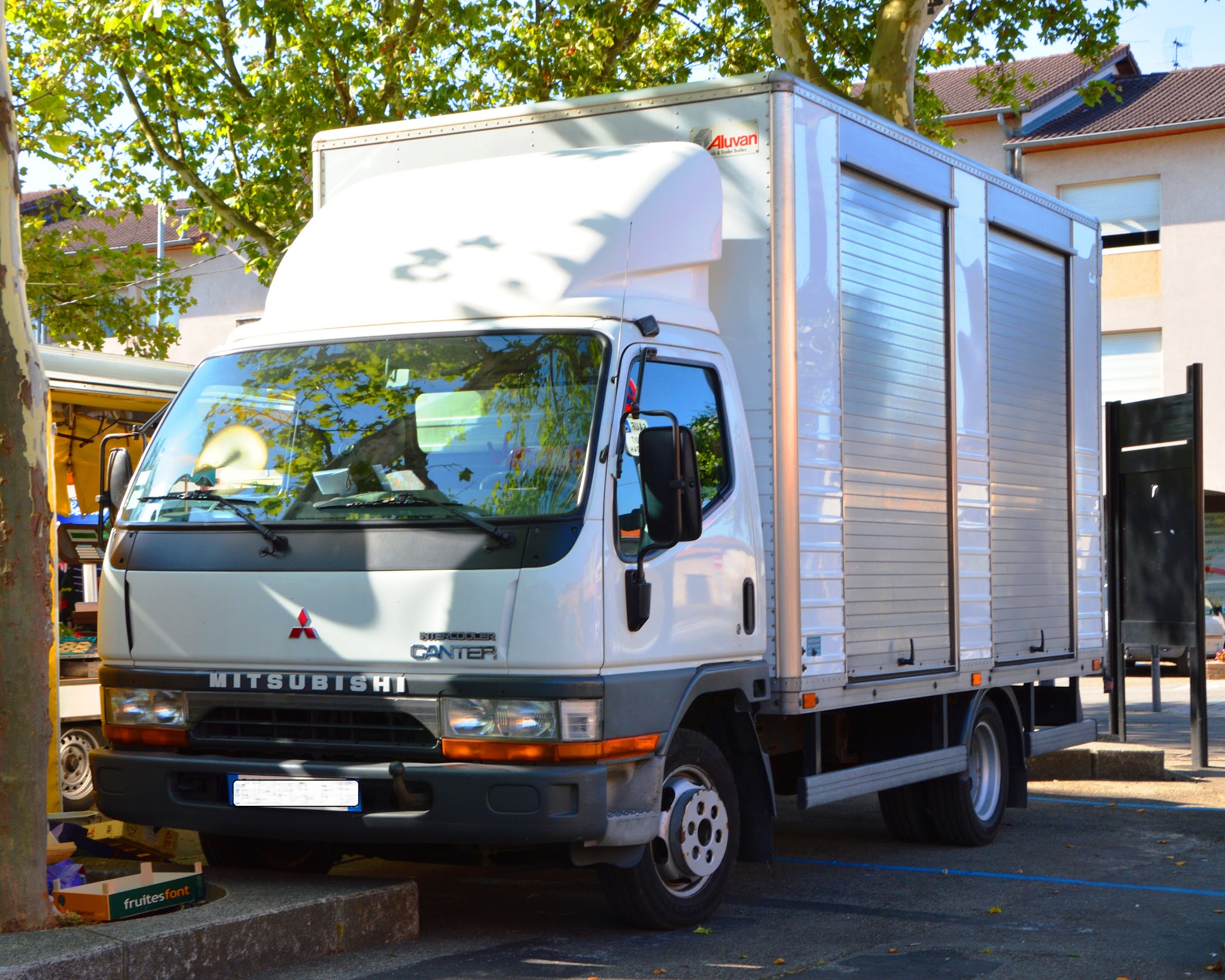
Box truck transport needs a plan for the complete truck, not just the length printed on its cargo box. Supply overall dimensions, actual weight, operability and pickup access so a transporter can assess carrying equipment or a driven move. A running truck is not automatically roadworthy for delivery, and a truck that fits a trailer by length may still fail a height, weight or loading check.
Measure the whole vehicle
Cargo-box length is not overall vehicle length. Include the cab, bumper and rear equipment when describing the truck, and identify items such as a liftgate, roof equipment or protruding fittings. Supply photographs from the side, front and rear so the operator can see features that a model name may miss. State the units used and whether dimensions are measured or taken from specifications.
Give the actual transport weight if available and distinguish it from the manufacturer’s gross vehicle weight rating. Tell the provider whether the box is empty. If tools, equipment or goods remain inside, disclose them and obtain explicit acceptance; do not assume that transporting the truck also includes transporting its contents.
Choose the movement method before pricing it
| Condition or constraint | Option to assess | Question that resolves it |
|---|---|---|
| Truck is roadworthy and can be driven | A driven delivery may be considered. | Who supplies the qualified driver, verifies legal road use and covers mileage, fuel and the delivery journey? |
| Truck needs to travel as cargo | A trailer matched to the complete truck. | What are the loaded height, weight distribution, deck capacity and loading limits? |
| Truck will not start, steer, brake or roll normally | Specialist loading and recovery assessment. | What equipment is needed at each end, and who supplies it? |
| Tight yard or limited loading area | An approved site plan or alternative handoff. | Can the proposed tractor/trailer enter, turn, load and leave safely? |
These are decision branches, not promises that each service is available. Do not choose a trailer solely from a photograph or assume a familiar equipment name proves fit. Ask the operator to confirm its selection against the specific truck and both sites.
Work through loading, route and securement
Also supply widest point + actual weight.
Loaded height = trailer deck + vehicle height.
Confirm loading feasibility
Explain ground clearance, wheelbase, overhang and any fault that affects movement. Ask how the truck will enter and leave the carrying equipment; unloading deserves its own plan.
Check the loaded transport envelope
The operator needs the truck and trailer combination, not just truck dimensions. Confirm who checks the route and any oversize or overweight permit requirements.
Assign securement responsibility
Identify the party responsible for the securement plan and inspection. Ask the operator to use the applicable requirements and suitable attachment points rather than prescribing tiedown counts yourself.
FMCSA provides cargo-securement requirements, including categories for vehicles and heavy equipment. FHWA’s permit information points to state authorities for oversize and overweight movements. Whether your shipment needs permits depends on the actual combination and route; no universal box-truck exemption or permit requirement is claimed here.
Make the release and delivery records useful
Arrange keys, access permission and a release contact before dispatch. Photograph the cab, box sides, roof where safely visible, rear equipment and existing damage. Record odometer and fuel information if the agreed method is driven delivery. For carried transport, retain the condition record and the agreed loading responsibilities.
Turn this plan into comparable transport options
Use the actual vehicle, pickup and delivery details, timing and handling needs so every quote starts from the same scope.
At destination, make sure the receiving person can inspect the vehicle and that the agreed unloading area is available. If the site or truck condition has changed, tell the transporter before arrival. A locked yard, added cargo or a newly seized wheel can invalidate the original assumptions. Document concerns on the handover record and follow the operator’s reporting process.
A complete enquiry should leave you knowing what moves, how it moves, who loads it, who checks the route and what each payment covers. If those answers are missing, the quote is not yet a complete box-truck transport plan.
Clarify whether the truck is empty, loaded, or carrying installed equipment
A box truck can change transport class when the body is not empty. Inventory anything that will remain inside, including tools, shelving contents, spare tires, ramps, pallets or job-site equipment. Give the transporter the actual or best available weight for the truck in the condition presented for pickup, and ask whether carriage of contents is permitted under the proposed service. A vehicle-transport quote should not silently be treated as approval to move commercial freight inside the box.
If the box contains permanently installed shelving, refrigeration equipment, a generator, a liftgate or rooftop equipment, photograph those items and include them in the dimension and weight discussion. The important question is not whether a feature is common on box trucks; it is whether the complete vehicle fits the assigned equipment and route.

Compare a box-truck quote against the complete movement
Ask every provider to quote the same configuration and endpoints. If one proposal assumes driven delivery and another assumes the truck will be carried, the totals are not alternatives for the same job. A carried move may depend on trailer deck height, loading angle, axle position and total loaded envelope. A driven move depends on roadworthiness, legal operation, driver responsibility, fuel, mileage and what happens if the truck becomes disabled en route.
For a broader view of how truck dimensions change equipment selection, use the truck transport planning guide. If the move is long-distance, the cross-country truck shipping guide is useful for separating vehicle facts from route and handoff decisions.
Resolve pickup and delivery geometry before dispatch
A truck that physically fits on transport equipment can still be difficult to collect from a narrow lot, loading dock, storage compound or residential street. Give the provider usable access notes: gate width, turning space, surface condition, slope, overhead clearance and any restrictions on large commercial equipment. Do the same for delivery. If the original address cannot accept the transporter safely, agree on an alternate handoff point before dispatch rather than discovering the problem with the loaded truck already nearby.
Make the final written scope answer five questions: what exact truck is moving, whether it is empty or carrying approved contents, how it will move, who performs any special loading or recovery, and what access is required at both ends. Those answers make the quote auditable and reduce the chance that a low initial price was based on an incomplete description.