
Transporting an excavator starts with the machine in its actual travel configuration: model, operating weight, overall dimensions, track width, boom and attachment position, counterweight, bucket or tool package, operability and both job-site conditions. The hauler must select equipment, loading method, securement and any route or permit work from those facts.
Quote the excavator in its travel position
Supply the model, operating condition and verified transport dimensions and weight. Ask which boom position and configuration the quote assumes. A bucket, breaker or counterweight carried separately needs its own weight, footprint and handling arrangement. Identify all pieces on the work order.
Who can prepare and load it?
Arrange a qualified operator who knows this machine. Use its manufacturer instructions for preparation and restraint points. Disclose hydraulic leaks, damaged tracks or inability to move; a hauler cannot plan recovery equipment from the description “excavator” alone.
Discuss the loading area with the carrier before arrival, including the approach, surface and space to maneuver. Photos inform that discussion but cannot certify ground capacity or ramp suitability.
Securement is a machine-specific task
FMCSA’s cargo-securement rules address heavy machinery and equipment. Have the carrier assess the excavator and separately carried attachments under the relevant requirements. This page does not prescribe a chain count or substitute for the operator’s technical plan.
FMCSA reference
Compare the complete work order
| Stage | Responsibility to name |
|---|---|
| Preparation | Configuration and detached parts |
| Loading | Machine operator and carrier equipment |
| Road movement | Route review and any permits |
| Delivery | Receiving operator and unloading area |
Stage: Preparation
Responsibility to name: Configuration and detached parts
Stage: Loading
Responsibility to name: Machine operator and carrier equipment
Stage: Road movement
Responsibility to name: Route review and any permits
Stage: Delivery
Responsibility to name: Receiving operator and unloading area
Record condition, identifiers and attachments at both ends. Agree how waiting, site rejection or a changed machine configuration affects price before dispatch.
Quote the complete machine, not the base model from a brochure
Excavators can carry different booms, sticks, buckets, thumbs, couplers, guards, counterweights and track options. Measure and weigh the machine as it will be presented for transport. If an attachment will travel separately, list it as a separate load item and identify who removes, lifts, secures and reinstalls it. If the boom or counterweight must be repositioned or removed for transport, that work belongs in the scope before equipment is dispatched.
Photograph the undercarriage, attachment, cab, boom and any fluid leak or collision damage. Tell the hauler whether the machine starts, tracks in both directions, steers, raises and lowers the boom normally, and can climb the proposed loading ramps under its own power.
Turn this plan into comparable transport options
Use the actual vehicle, pickup and delivery details, timing and handling needs so every quote starts from the same scope.
Make site conditions part of the loading decision
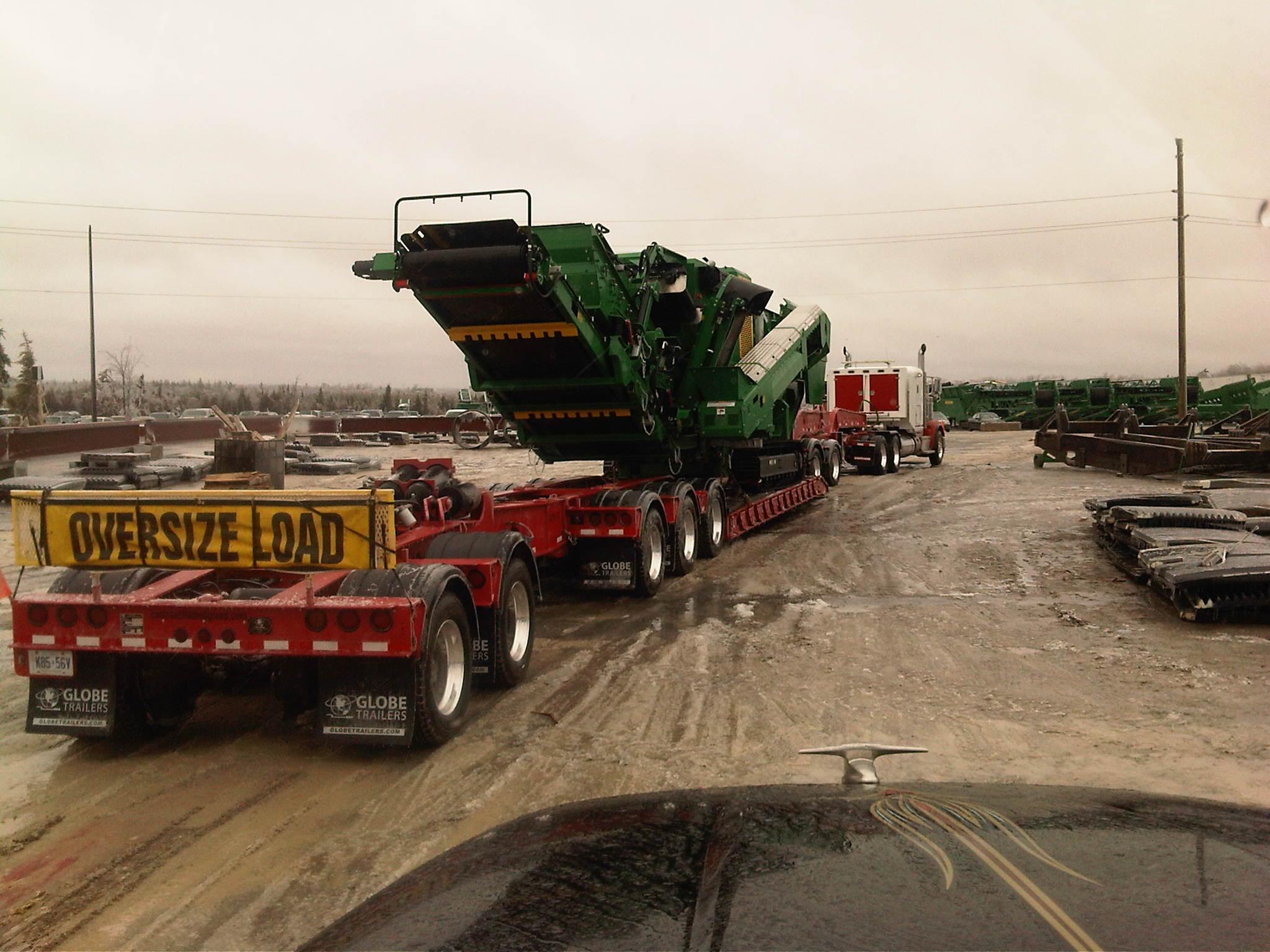
A construction site may have mud, soft shoulders, steep grades, limited turning space, overhead lines, narrow gates or active crews. A storage yard may have better surface conditions but restricted hours or no loading assistance. Give the hauler enough information to decide whether the transport equipment can enter, align, load and exit safely. Do the same at delivery; unloading a tracked machine requires a planned area, not just a street address.
If the excavator is disabled, say exactly what is immobilized. A dead battery, failed engine, broken final drive or seized track are not equivalent problems. Ask what recovery or lifting equipment is needed and whether another contractor must be coordinated before linehaul.
Separate equipment fit from route permissions
The hauler should calculate the loaded combination using the machine and the selected trailer. Overall loaded height, width, weight and axle distribution may determine whether a route review or oversize/overweight permission is needed. FHWA points users to state permitting authorities, while FMCSA has commodity-specific securement rules for heavy vehicles, equipment and machinery. Those references support the need for a load-specific professional plan; they do not mean every excavator uses the same trailer, tiedown pattern or permit.
The excavator transport cost guide helps turn those equipment and route decisions into a complete quote worksheet.
Assign responsibility for attachments, fluids and handoff
Ask who checks or drains anything the carrier requires, who folds mirrors or guards, who handles removable attachments, and who is authorized to operate the excavator at each site. Keep keys and any machine-specific start or shutdown procedure with the release contact. If the machine has telematics or anti-theft controls that can prevent movement, disclose them before pickup.
At delivery, inspect the machine before it returns to work. Photograph the attachment, cab, glass, body panels and undercarriage, and record any concern before site activity or repairs can obscure the transport condition. A useful completion record identifies the exact machine and attachments received, not simply that “the excavator arrived.”
Compare proposals on the whole work order
Use the same machine data for every quote. Compare loading assistance, trailer type, route and permit responsibility, escorts if required, attachment handling, waiting time assumptions, delivery access and any recovery work. A low linehaul number can become the expensive option if the machine was quoted as a smaller or fully operable configuration than the one waiting at the job site.