

Car Shipping Rates New York To California is best handled as a quote-scope comparison, not a published market-price claim. Keep the route, vehicle condition and included responsibilities identical while you test which documented factors actually change the offer.
Build a like-for-like quote request
Hold the shipment facts constant, then compare the differences providers actually document instead of mixing unlike handoff or service assumptions.
Cost evidence: New York freight plan
New York freight plan establishes New York freight planning for planning purposes. Do not turn that into a service promise.
Cost evidence: California freight plan
California’s Freight Mobility Plan is statewide system context; use it to understand freight planning while leaving actual pickup-street access to the carrier and property owner.
Replace state names with two actual handoffs
New York and California are too broad to define a shipment price. Give the actual pickup and delivery addresses or, at minimum, the precise cities and location types. A dense urban street, suburban residence, auction lot and dealership can require different loading plans even when the interstate distance is similar. Ask whether the assigned transporter can reach both locations and what alternate handoff would be used if it cannot.
For the New York side, the New York auto transport guide helps distinguish statewide planning from a specific pickup. For a direct route framework, New York-to-California car shipping focuses on the complete cost and eligibility questions around the same state pair.
Use one vehicle specification for every rate request
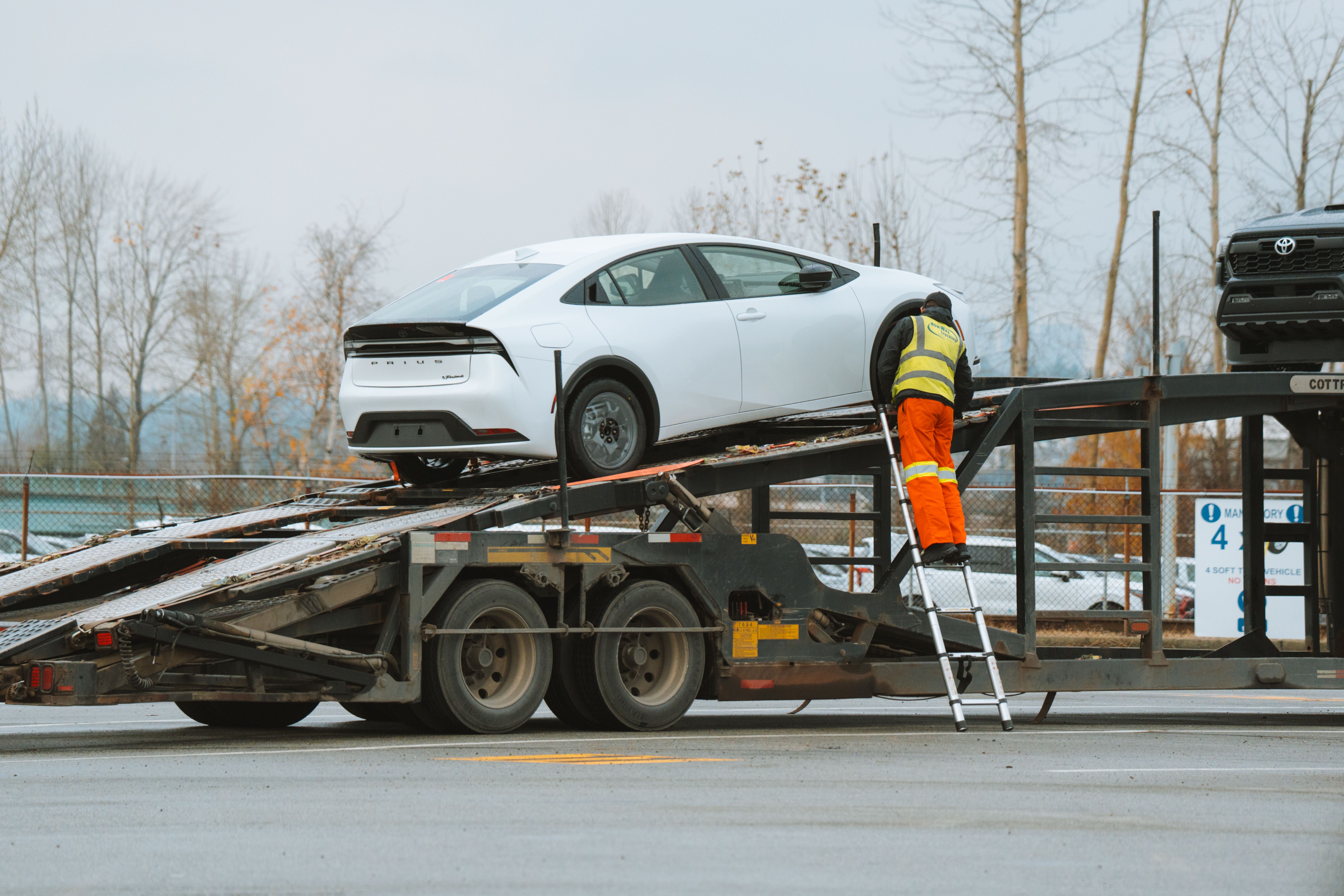
Record year, make, model, body style, operability, modifications and low-clearance or oversize features. A running stock sedan and a nonrunning lifted truck should not be compared under one generic state-to-state “rate.” If the car is not operable, describe whether it rolls, steers and brakes so providers can price the correct loading capability.
Choose open or enclosed transport before comparing base offers. If you want both, request both from the same shipment facts and keep the alternatives separate. Enclosed equipment, expedited pickup or specialized loading can change capacity and scope, so the price difference should be tied to the service choice rather than presented as unexplained market variation.
Make timing a controlled variable
Give the earliest release date, any hard latest pickup date and the receiving party’s availability. If your schedule is flexible, ask what range the provider needs. Then, if an expedited option is offered, compare it with the same vehicle and endpoints. This shows what you are paying for rather than attributing the entire difference to “season” or distance.
Do not treat a quoted delivery estimate as a guaranteed appointment unless the written terms specifically create such a commitment and explain its conditions. Plan flights, lease returns and other fixed events with enough margin for the service you actually booked.
Turn this plan into comparable transport options
Use the actual vehicle, pickup and delivery details, timing and handling needs so every quote starts from the same scope.
Distinguish quote, carrier acceptance and payment
Ask whether the company is acting as a broker or carrier and whether a carrier has accepted the job. A broker’s initial quote can be useful for comparison, but it is not the same event as an assigned carrier agreeing to the shipment. Verify the legal entity, read the written terms and record how deposits and the remaining balance are paid.
The FMCSA consumer advisory already linked on this page supports broker/carrier verification for interstate auto transport. The New York and California freight plans provide broader freight context but do not publish a consumer price for this exact car shipment.
Compare the final scope, not a rate-per-mile shortcut
Long-distance quotes can include variables that a mileage formula cannot see: equipment type, exact lane demand, pickup access, delivery access, vehicle size, operability and date flexibility. Use mileage as background, not as a promise of what a current carrier must charge.
Build a comparison table with vehicle, method, dates, pickup access, delivery access, included services, conditional charges, deposit, balance, cancellation terms and what event makes the price final. If those fields differ, correct the scope before deciding which New York-to-California offer is lower.
Keep condition evidence through the cross-country handoff
Photograph the car shortly before pickup, remove or disclose loose items according to the provider’s rules, and keep keys and release authorization ready. At delivery, inspect the vehicle before it is moved into a repair facility or driven away by someone who was not present at pickup. A clear condition trail is especially useful when the shipment crosses several days and multiple states.
Ask how the plan changes if one endpoint cannot accept the assigned truck
Before booking, agree on a fallback handoff for both states. A New York pickup can become difficult because of street access or property rules, while a California delivery can face its own gate, curb or neighborhood constraints. The alternative should be a legal, practical location that the releasing or receiving person can reach, not an unspecified “nearby terminal” added after dispatch.
If using the fallback changes the price, record that rule in the quote. If it does not, still keep the location and authorization in the shipment notes. This gives the driver a usable plan and lets you compare providers on the same endpoint responsibility rather than on two different interpretations of door-to-door service.