
Ship heavy equipment by defining the machine before defining the trailer.
Record the machine’s transport dimensions, operating weight, mobility and attachments; determine how it can be loaded; match the trailer and securement plan; then check whether the loaded combination needs permits or route restrictions.
A heavy-equipment planning sequence
Measure
Transport height, width, length and operating weight.
Configure
Attachments, articulation and whether components can be lowered or removed.
Load
Ramp/drive-on, crane assistance or other loading capability.
Route
Loaded dimensions, securement and state permit requirements.
Securement is equipment-specific
FMCSA has commodity-specific securement rules for heavy vehicles, equipment and machinery. The federal rule applies specifically to wheeled or tracked heavy equipment at or above 10,000 lb; lighter equipment may be secured under those rules or other applicable securement provisions.
| Planning item | Record before quote | Why it changes the move |
|---|---|---|
| Machine | Make/model, weight, dimensions | Trailer capacity and deck configuration |
| Attachments | Bucket, blade, boom, forks, articulated sections | Transport profile and securement |
| Mobility | Runs/steers/brakes vs non-operational | Loading equipment and pickup setup |
| Loaded profile | Overall height, width, length and weight | Permit and route review |
An oversize/overweight permit is not a generic badge attached to the machine. The loaded vehicle combination and the states/jurisdictions on the route determine what permit planning is required.
Freeze the transport configuration before requesting equipment
Start with the machine as it will actually travel. Record make, model, serial number, working or transport weight, width, length and height, then list every attachment, counterweight, blade, bucket, boom or accessory that remains fitted. If components may be removed to reduce the loaded profile, have a qualified party decide that work and record where the removed items will travel. A trailer cannot be selected reliably from a base-model specification when the actual machine is configured differently.
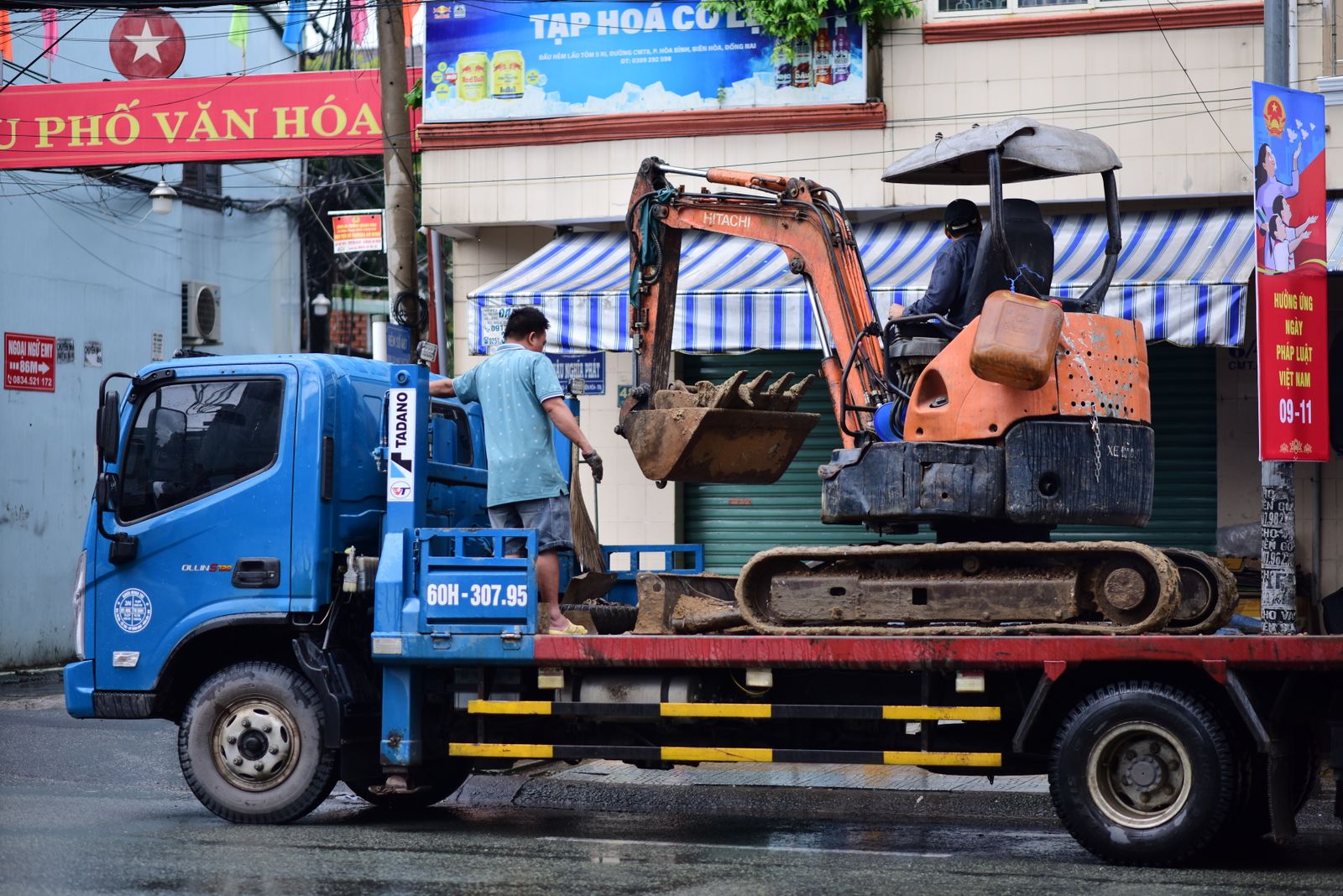
The heavy-equipment cost guide turns those configuration choices into quote questions. For an excavator, the excavator cost guide focuses on boom, bucket and site-handling details.
Turn this plan into comparable transport options
Use the actual vehicle, pickup and delivery details, timing and handling needs so every quote starts from the same scope.
Describe operability for loading, not just for production use
A machine can be out of service yet still roll and steer well enough for one loading method, while another can have locked tracks, damaged hydraulics or no safe means of self-propelled movement. Tell the hauler exactly what works and what does not. Identify who can operate the machine at pickup and delivery and whether keys, master switches or access codes are available.
If recovery, crane assistance or another machine is needed to load it, name the supplier and include that appointment in the transport plan. Do not make the driver improvise a recovery method after arriving at a field, yard or auction.
Make both sites part of the equipment choice
Send photographs or a clear description of gate width, surface, overhead clearance, slope, turning space and the proposed loading area. A trailer that can carry the machine may still be unable to reach the machine. If the site is soft, narrow or restricted, establish an accessible staging point before dispatch. The destination needs the same review, including a receiver with authority and unloading capability.
For auction or construction-site moves, confirm operating hours and whether an appointment is required. Ask who pays waiting or redelivery when a site is not ready.
Let the carrier own the route and securement plan
Provide accurate machine facts, but let the qualified carrier determine its trailer configuration, securement and route. FMCSA has commodity-specific securement requirements for heavy vehicles, equipment and machinery, and oversize or overweight permitting depends on the loaded combination and the jurisdictions crossed. The owner should not substitute a generic tie-down pattern or passenger-car route for the carrier’s professional plan.
Ask which loaded dimensions the route review used, whether permits or escorts are included, and how a changed measurement is approved and priced. Keep those answers with the accepted quote.
Close the movement with an inventory and condition record
Before release, photograph the machine, serial plate where appropriate, attachments and existing damage. Inventory removed components and identify the person authorized to approve changes. At delivery, reconcile the same inventory and document condition before the transport equipment leaves when practical.
For a sale, lease return or auction purchase, resolve release authority before the truck is dispatched. The transporter may need a release number, bill of sale, gate pass or named contact even though none of those changes the machine's physical dimensions. Missing administrative release can create waiting charges just as readily as a loading problem.
A heavy-equipment shipment is ready only when the machine configuration, loading capability, two sites, route responsibility and receiver line up. Treating those as one plan prevents a cheap line-haul figure from turning into an expensive recovery problem.